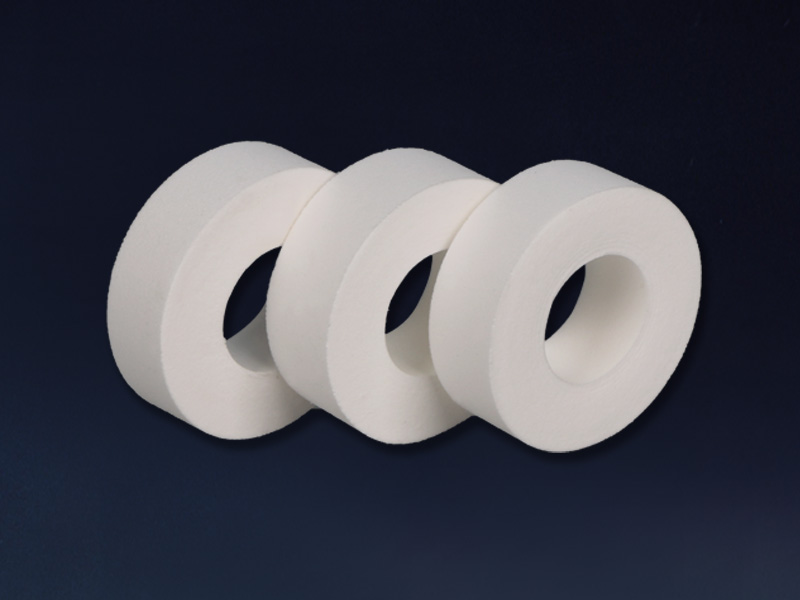
Product overview
Absorbent Sponges & Rollers
PVC Absorbent Sponge Roller 15 x 32 x 9 mm
| Material | PVC sponge |
|---|---|
| Form | Sponge ring |
| Catalogue size designation | 15 × 32 × 9 mm |
| Use | Water absorption and process cleaning |
| Listed packing | 25 pieces/pack |
| Customization | Dimensions and assembly details by agreement |
Confirm the dimension order, bore, outside dimensions, covered length and core interfaces on an approved drawing. Material data depend on grade and conditioning.
Sponge dimensions, core arrangement and material grade can be customized for the process.
This PVC sponge ring is a compact contact element for a compatible absorbent roller assembly. The ring format allows the contact arrangement to be built around the shaft and the width of the material being processed.
Check the ring stack before fitting
For a segmented roller, individual ring width and the number of rings determine the assembled contact span. Check the bore, outside diameter and axial width against a dimensioned drawing; the catalogue size sequence alone does not define those positions.
Keep adjacent rings aligned and avoid crushing them during assembly. Uneven compression or gaps between elements can create differences in contact across the workpiece.
Maintain the absorbent surface
The sponge works as part of a liquid-removal arrangement, so both incoming liquid and the method of removing collected water matter. Inspect for embedded particles, hard deposits and permanent deformation. Evaluate the material with the actual rinse chemistry and operating temperature before selecting a replacement grade.
A visually similar ring is not necessarily interchangeable. Confirm the assembly geometry and conditioned material behavior when ordering spare elements.
Material data
| Hardness designation | 15; adjustable range 10–70, scale unspecified |
|---|---|
| Tensile strength | 420 kPa |
| Elongation | 220% |
| Average pore diameter | 60 µm; stated adjustment range 30–150 µm |
| Porosity | 75% |
| Heat-resistance value | 70 °C |
These material-level values support grade comparison; they are not guaranteed finished-roller test results. Confirm the test method, conditioning and allowable operating conditions for the selected grade. Chemical compatibility must be assessed for the actual fluid, concentration and temperature.
Sponge dimensions, core arrangement and material grade can be customized for the process.