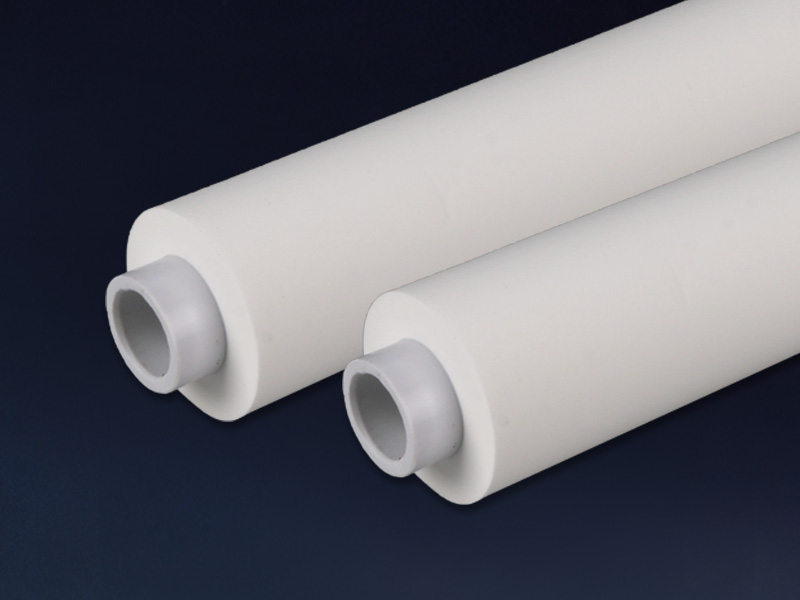
Product overview
Absorbent Sponges & Rollers
PU Absorbent Sponge Roller 40 x VP16 x 240 x 260 mm
| Material | PU sponge |
|---|---|
| Form | Smooth sponge roller with tube core |
| Catalogue size designation | 40 × VP16 × 240 × 260 mm |
| Use | Water absorption and process cleaning |
| Listed packing | Custom roller/large-roll format |
| Customization | Dimensions and assembly details by agreement |
Confirm the dimension order, bore, outside dimensions, covered length and core interfaces on an approved drawing. Material data depend on grade and conditioning.
Sponge dimensions, core arrangement and material grade can be customized for the process.
The smooth PU sleeve provides a continuous contact face over a supporting tube. This compact roller format is intended to fit a defined machine interface for liquid pickup, transfer or removal.
Coordinate core, sleeve and end projection
The core locates the roller while the sleeve contacts the workpiece. Check both functions on the drawing: bore and mounting dimensions must fit the machine, and the covered span must reach the intended process width.
Confirm the end projection on each side rather than assuming the difference between two catalogue numbers is split equally.
Commission with the process liquid
Assess contact pressure, rotation and liquid removal using representative material. The grade's response can differ between dry inspection and wet operation. Establish the approved setup before using the roller at production speed.
Inspect the sleeve-to-core connection and the contact surface when servicing. Replace a roller with loose material, persistent deposits or damaged ends; forcing a worn assembly to work through extra compression can create uneven contact.
Material data
| Hardness designation | 5–70; test scale unspecified |
|---|---|
| Pore diameter | 15–100 µm |
| Tensile strength | 120 kPa |
| Porosity | 75–90% |
| Water-retention value | 300–400%; test basis unspecified |
| Heat-resistance values | 130 °C in air; 100 °C in water |
These material-level values support grade comparison; they are not guaranteed finished-roller test results. Confirm the test method, conditioning and allowable operating conditions for the selected grade. Chemical compatibility must be assessed for the actual fluid, concentration and temperature.
Sponge dimensions, core arrangement and material grade can be customized for the process.