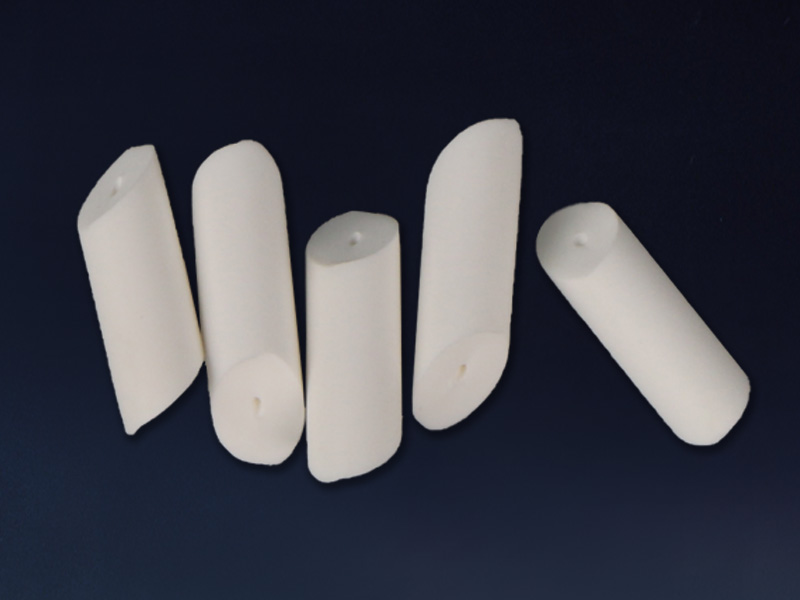
Product overview
Absorbent Sponges & Rollers
PU Absorbent Sponge 5 mm Double Bevel
| Material | PU sponge |
|---|---|
| Form | Small hollow angled sponge element |
| Catalogue size designation | 5 mm; double bevel |
| Use | Water absorption and process cleaning |
| Listed packing | 25 pieces/pack |
| Customization | Dimensions and assembly details by agreement |
Confirm the dimension order, bore, outside dimensions, covered length and core interfaces on an approved drawing. Material data depend on grade and conditioning.
Sponge dimensions, core arrangement and material grade can be customized for the process.
Double-bevel ends give these small hollow PU sponge elements a distinct contact geometry. They are intended for a holder or fixture that controls orientation and pressure at the work surface.
Specify both end faces
When replacing a shaped sponge, the bevel arrangement matters as well as the nominal size. Confirm each end angle, the element length and the hollow center against the mounting design. Reversing or rotating an asymmetrical contact element can change the point of contact.
Use the shape without overloading it
Apply only the pressure established for the process. Excess compression can collapse the angled tip and make the effective contact area unpredictable. Inspect for tears around the bore and for permanent bending after repeated use.
For liquid pickup, assess how quickly the small element becomes saturated and how it is renewed. Keep spare elements protected and separate used parts from clean stock. Agree the PU grade and fluid compatibility before using the element on a sensitive component.
Material data
| Hardness designation | 5–70; test scale unspecified |
|---|---|
| Pore diameter | 15–100 µm |
| Tensile strength | 120 kPa |
| Porosity | 75–90% |
| Water-retention value | 300–400%; test basis unspecified |
| Heat-resistance values | 130 °C in air; 100 °C in water |
These material-level values support grade comparison; they are not guaranteed finished-roller test results. Confirm the test method, conditioning and allowable operating conditions for the selected grade. Chemical compatibility must be assessed for the actual fluid, concentration and temperature.
Sponge dimensions, core arrangement and material grade can be customized for the process.