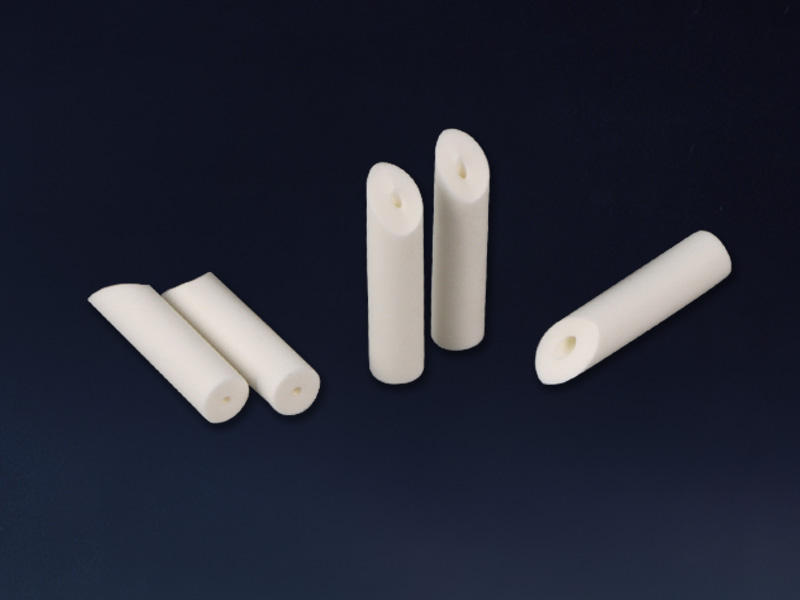
Product overview
Absorbent Sponges & Rollers
PU Absorbent Sponge 3 mm
| Material | PU sponge |
|---|---|
| Form | Small hollow angled sponge element |
| Catalogue size designation | 3 mm designation |
| Use | Water absorption and process cleaning |
| Listed packing | 25 pieces/pack |
| Customization | Dimensions and assembly details by agreement |
Confirm the dimension order, bore, outside dimensions, covered length and core interfaces on an approved drawing. Material data depend on grade and conditioning.
Sponge dimensions, core arrangement and material grade can be customized for the process.
These small PU sponge elements have a hollow center and an angled end. Their compact contact shape is useful where a broad sponge or full-width roller would be difficult to position.
Control the contact area
The angled end changes where the sponge touches the surface. Confirm the intended orientation, holder engagement and approach direction before use. A concentrated contact area should be evaluated for marking, snagging and liquid pickup on the actual part.
The 3 mm label is a catalogue size designation. Specify bore, outside dimensions and length separately when defining the element for a holder.
Replace a loaded tip promptly
A small sponge has limited room for retained liquid and contamination. Set a change or cleaning interval around the amount collected in the operation. Avoid continuing with a deformed or dirty tip that can spread material to adjacent features.
Keep unused elements enclosed and handle them by the mounting area where possible. Select the cleaning fluid and sponge grade together; appearance alone does not establish solvent compatibility.
Material data
| Hardness designation | 5–70; test scale unspecified |
|---|---|
| Pore diameter | 15–100 µm |
| Tensile strength | 120 kPa |
| Porosity | 75–90% |
| Water-retention value | 300–400%; test basis unspecified |
| Heat-resistance values | 130 °C in air; 100 °C in water |
These material-level values support grade comparison; they are not guaranteed finished-roller test results. Confirm the test method, conditioning and allowable operating conditions for the selected grade. Chemical compatibility must be assessed for the actual fluid, concentration and temperature.
Sponge dimensions, core arrangement and material grade can be customized for the process.