Product overview
Absorbent Sponges & Rollers
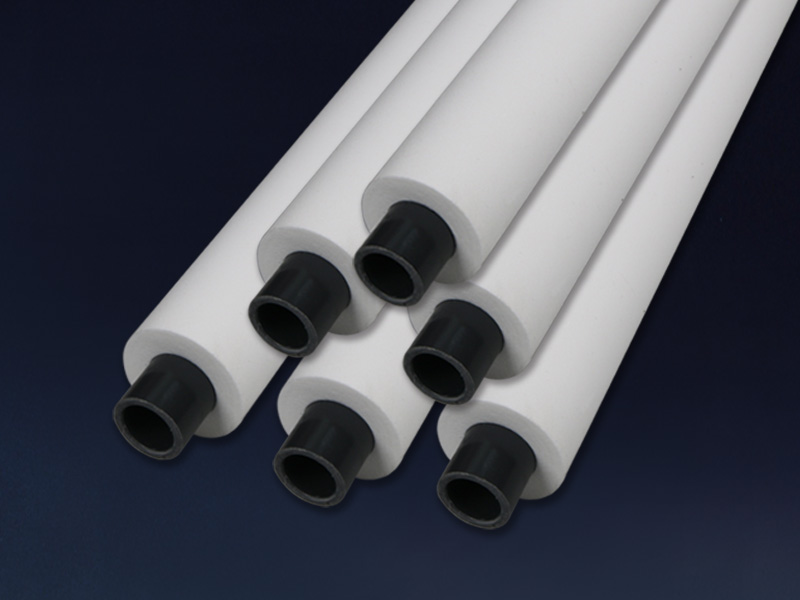
PO Absorbent Sponge Roller 40 x VP16 x 760 x 780 mm
| Material | PO sponge |
|---|---|
| Form | Smooth sponge roller with tube core |
| Catalogue size designation | 40 × VP16 × 760 × 780 mm |
| Use | Water absorption and process cleaning |
| Listed packing | Custom roller/large-roll format |
| Customization | Dimensions and assembly details by agreement |
Confirm the dimension order, bore, outside dimensions, covered length and core interfaces on an approved drawing. Material data depend on grade and conditioning.
Sponge dimensions, core arrangement and material grade can be customized for the process.
This extended PO roller offers a broad absorbent contact span. Its length makes support, straightness and even loading central to a successful replacement or new installation.
Review the line across its width
Compare contact at the center and near the supports under normal operating load. A long roller may behave differently when loaded than when checked on a bench. Confirm core rigidity, mounting alignment and the relationship to the opposing surface.
Check the maximum workpiece width and its tracking path. The useful contact area should remain inside the approved sponge-covered span.
Handle long spares carefully
Provide support during storage and installation to avoid bending the assembly or compressing one part of the sleeve for an extended period. Keep the surface covered against contamination until the roller is installed.
Agree the material grade and cleaning requirements alongside the drawing. During maintenance, inspect the full span for deposits, local wear and bond damage; defects can otherwise produce the same unwanted pattern on each passing workpiece.
Material data
| Hardness designation | 15; adjustable range 10–70, scale unspecified |
|---|---|
| Tensile strength | 420 kPa |
| Elongation | 220% |
| Average pore diameter | 60 µm; stated adjustment range 30–150 µm |
| Porosity | 75% |
| Heat-resistance value | 70 °C |
These material-level values support grade comparison; they are not guaranteed finished-roller test results. Confirm the test method, conditioning and allowable operating conditions for the selected grade. Chemical compatibility must be assessed for the actual fluid, concentration and temperature.
Sponge dimensions, core arrangement and material grade can be customized for the process.