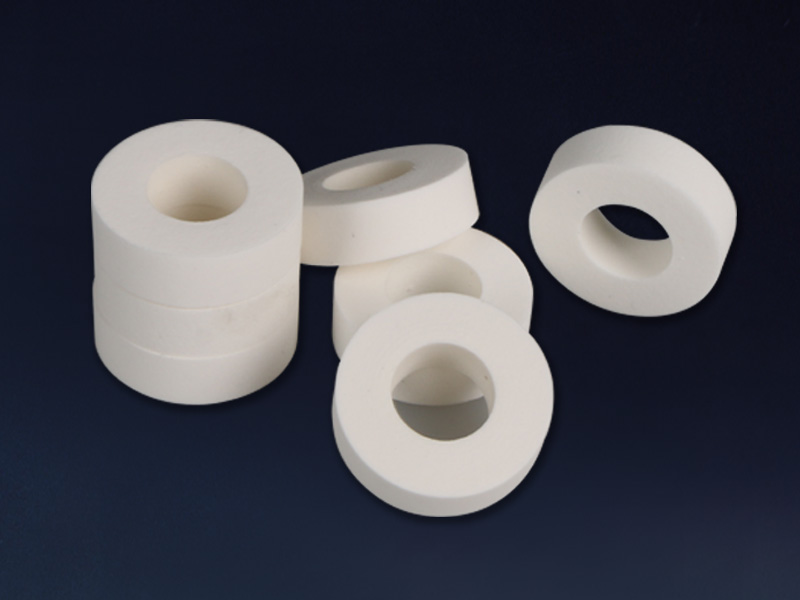
Product overview
Absorbent Sponges & Rollers
PO Absorbent Sponge Roller 15 x 30 x 9 mm
| Material | PO sponge |
|---|---|
| Form | Sponge ring |
| Catalogue size designation | 15 × 30 × 9 mm |
| Use | Water absorption and process cleaning |
| Listed packing | 25 pieces/pack |
| Customization | Dimensions and assembly details by agreement |
Confirm the dimension order, bore, outside dimensions, covered length and core interfaces on an approved drawing. Material data depend on grade and conditioning.
Sponge dimensions, core arrangement and material grade can be customized for the process.
The PO sponge ring provides a compact absorbent element without a visible separate bushing in the photographed form. Selection should consider the mounting fit and the way the soft body contacts the passing material.
Confirm the supported bore
The shaft or holder must support the ring without damaging its inner surface. Specify the bore fit and retention method, then confirm the installed outside profile. Do not infer the dimension order from the three-number catalogue label.
For a stack, keep the rings aligned and define the intended side compression. Uneven spacing can change contact across the assembly.
Evaluate the material in the wet process
The PO family is described for water pickup and liquid removal. Its suitability still depends on the actual bath or rinse fluid, operating temperature and cleaning cycle. Review changes in swelling, recovery and surface condition during qualification.
Keep replacement rings protected from dust and mechanical compression. If a repeated stripe develops on the workpiece, inspect ring alignment and localized deposits as well as the overall absorbency.
Material data
| Hardness designation | 15; adjustable range 10–70, scale unspecified |
|---|---|
| Tensile strength | 420 kPa |
| Elongation | 220% |
| Average pore diameter | 60 µm; stated adjustment range 30–150 µm |
| Porosity | 75% |
| Heat-resistance value | 70 °C |
These material-level values support grade comparison; they are not guaranteed finished-roller test results. Confirm the test method, conditioning and allowable operating conditions for the selected grade. Chemical compatibility must be assessed for the actual fluid, concentration and temperature.
Sponge dimensions, core arrangement and material grade can be customized for the process.