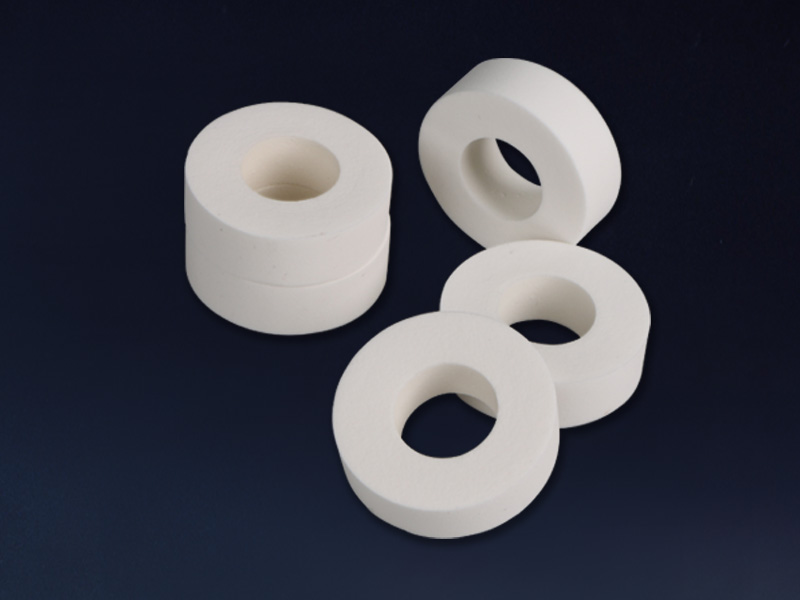
Product overview
Absorbent Sponges & Rollers
PO Absorbent Sponge Roller 14 x 30 x 10 mm
| Material | PO sponge |
|---|---|
| Form | Sponge ring |
| Catalogue size designation | 14 × 30 × 10 mm |
| Use | Water absorption and process cleaning |
| Listed packing | 25 pieces/pack |
| Customization | Dimensions and assembly details by agreement |
Confirm the dimension order, bore, outside dimensions, covered length and core interfaces on an approved drawing. Material data depend on grade and conditioning.
Sponge dimensions, core arrangement and material grade can be customized for the process.
This PO ring offers a different nominal fit from the 15 x 30 x 9 mm version. It should be selected by the approved assembly geometry, with attention to the bore and total stack width.
Keep similar spare parts distinguishable
Small changes in the bore or ring width can be difficult to recognize visually. Label accepted spares with the drawing and material grade, and keep neighboring sizes in separate storage locations.
Confirm the conditioned dimensions used for acceptance. A soft absorbent part should not be measured under arbitrary compression and then compared with an unloaded specification.
Review the complete removal cycle
Water pickup is only one step: the assembly also needs a way to release retained liquid and present a usable surface on the next pass. Assess the ring under representative loading and renewal conditions.
Inspect for tears, hard deposits and changes in shape during servicing. Choose cleaning chemistry for the actual PO grade and surrounding machine components, avoiding a generic assumption that all sponge materials tolerate the same solvents.
Material data
| Hardness designation | 15; adjustable range 10–70, scale unspecified |
|---|---|
| Tensile strength | 420 kPa |
| Elongation | 220% |
| Average pore diameter | 60 µm; stated adjustment range 30–150 µm |
| Porosity | 75% |
| Heat-resistance value | 70 °C |
These material-level values support grade comparison; they are not guaranteed finished-roller test results. Confirm the test method, conditioning and allowable operating conditions for the selected grade. Chemical compatibility must be assessed for the actual fluid, concentration and temperature.
Sponge dimensions, core arrangement and material grade can be customized for the process.