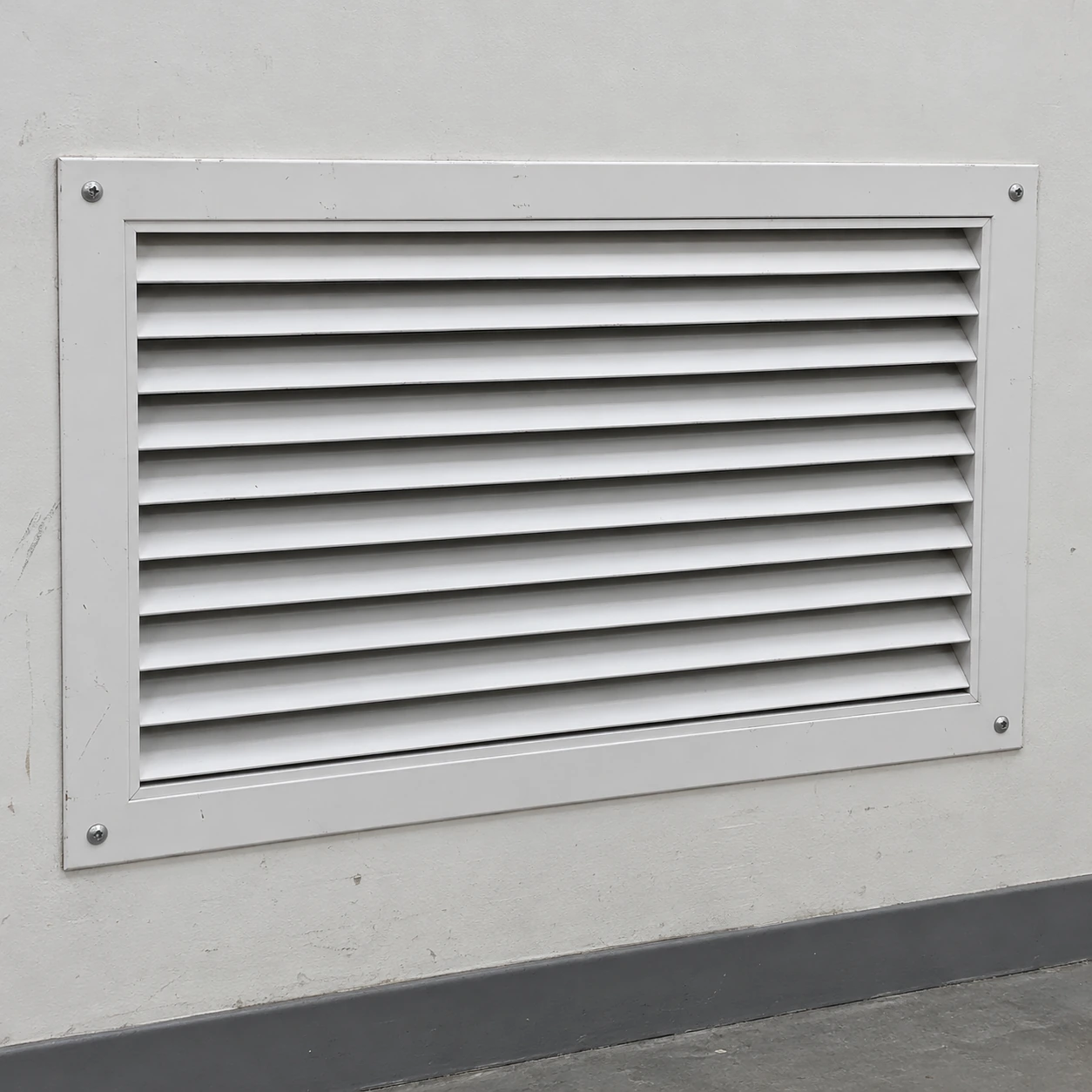
Return Air Grilles
wall return air grille
| Brand | shengtongJH |
|---|---|
| Opening options | 300 × 200 / 500 × 300 / 600 × 400 mm, W × H |
| Face | Inclined fixed blades or selected open-grid core |
| Materials | Coated steel or aluminium |
| Mounting | Surface flange or recessed wall frame |
| Core | Fixed or removable |
| Filter provision | Optional holder with separately matched panel |
| Fixing | Suitable fasteners into supported wall or plenum perimeter |
| Finish | White, grey or project coating |
| Blade orientation | Selected for sightline and access requirements |
| Location | Unobstructed indoor industrial or commercial return position |
Wall cut-out, rear neck and visible face dimensions differ. Confirm the selected assembly drawing and wall support before installation.
Opening, border, blade orientation and service access can be customized to the wall construction and return-air route.
A wall return air grille should sit where air can reach it without being blocked by equipment, shelving or stored materials. Its frame and access method must also suit the wall construction and the maintenance task behind the face.
Keep the air path clear after handover
A wall grille can be installed correctly and later become obstructed by a cabinet, stock shelf or movable screen. Choose its position with the room's working layout in mind. A visible clear zone is easier to maintain when the grille is not placed in a natural storage location.
Check both sides of the opening. A clear front face does not help if the rear return void is narrowed by a structural member or a service crossing immediately behind it.
Make the wall carry the frame
The fixing should suit the substrate and the weight of the selected assembly. Thin wall finishes alone may not provide an adequate fixing for repeated core removal. Provide a sound perimeter or connection to the return box rather than overtightening the flange against a flexible panel.
Use blade direction for the intended sightline
Inclined blades can reduce the view into the void from a normal approach direction. Their orientation should be decided alongside the grille position and lighting. Turning the face to hide the inside may also change the access edge or the way a hinged assembly opens, so record the complete orientation on the drawing.
Where local filtration is specified, leave enough space in front of the face to remove the panel. A nearby door or machine guard can obstruct that service path even when it does not block normal airflow.
Choose a repeatable maintenance arrangement
A removable centre allows cleaning or inspection while the border remains fixed to the wall. For a simple unfiltered return, that may be enough. More involved equipment behind the opening may need a separate access panel rather than expecting every service task to pass through the grille.
Opening, border, blade orientation and service access can be customized to the wall construction and return-air route.