Plate Heat Exchangers
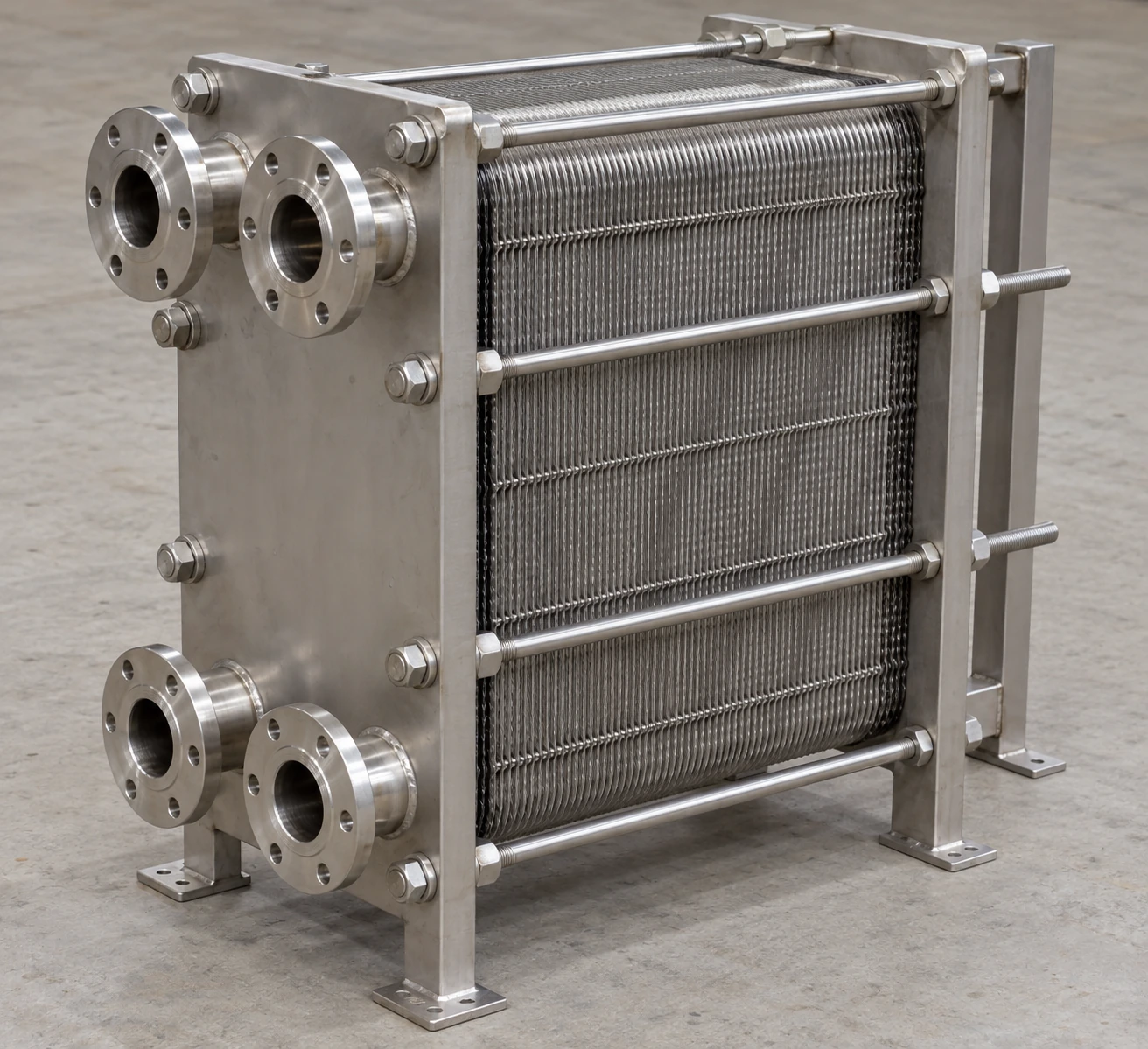
stainless steel plate heat exchanger
| Brand | shengtongJH |
|---|---|
| Wetted plate choices | 304 / 316L stainless steel |
| Plate thickness options | 0.5 / 0.6 / 0.8 mm where supported by the selected pattern |
| Frame choices | Painted carbon steel or stainless steel |
| Connection material | Stainless wetted connections; flange construction specified separately |
| Gaskets | EPDM / NBR compound selected for fluids and cleaning agents |
| Pressure classes | 10 / 16 bar selected assembly options |
| Frame face classes | Approx. 250 × 750 / 330 × 950 / 500 × 1,100 mm, width × height |
| Depth | Matched to plate count, carrying bar and maintenance travel |
| Connection sizes | DN25 / DN50 / DN65 / DN100 |
| Supply documents | Material identification and selected assembly drawing as agreed |
Stainless steel is not corrosion-proof in every fluid. Alloy selection must consider chemistry, temperature, concentration and cleaning exposure.
Wetted materials, external frame finish, seals and connection arrangements can be customized to the process and service environment.
A stainless steel plate heat exchanger may have stainless heat-transfer plates, a stainless frame, or both. Defining which parts contact the fluid prevents an attractive external finish from being mistaken for complete corrosion compatibility.
Separate appearance from the wetted specification
A painted frame with suitable stainless plates may be adequate for a dry utility room. A stainless frame may be useful where the surrounding environment or cleaning routine justifies it. Neither choice, on its own, decides whether the internal fluid is compatible.
List plate alloy, connection material and gasket compound separately. On a brazed unit, include the brazing material as well. This avoids describing an entire exchanger with one broad material label that leaves important components unspecified.
Use the water analysis, not a general corrosion promise
Chlorides, temperature and concentrated deposits can affect stainless alloys. The fluid entering the exchanger and any cleaning chemicals both matter. A more expensive alloy is not a substitute for understanding those conditions, and ordinary stainless should not be assumed suitable for seawater or aggressive process liquids.
When replacing a corroded unit, record the location and pattern of damage before selecting the new material. Local deposits, stagnant areas or cleaning exposure may be contributing factors. A like-for-like alloy replacement without investigating the cause can repeat the failure.
For routine industrial water service
Choose a conventional plate-and-frame construction with suitable seals and accessible strainers. Maintenance access and sensible pipe support often provide more practical value than an unnecessarily polished exterior.
For more demanding fluids
Request a specific compatibility review and appropriate material documentation. If another alloy or a different construction is necessary, establish that before agreeing the dimensions and connection positions.
Make the order description precise
State whether stainless is required only for wetted parts or also for the frame and external fittings. Include the fluid composition and temperature range, rather than specifying a grade without context. shengtongJH can coordinate a material-specific supply comparison and identify the required documents; a hygienic or regulatory certification is not implied merely by the use of stainless steel.
Wetted materials, external frame finish, seals and connection arrangements can be customized to the process and service environment.