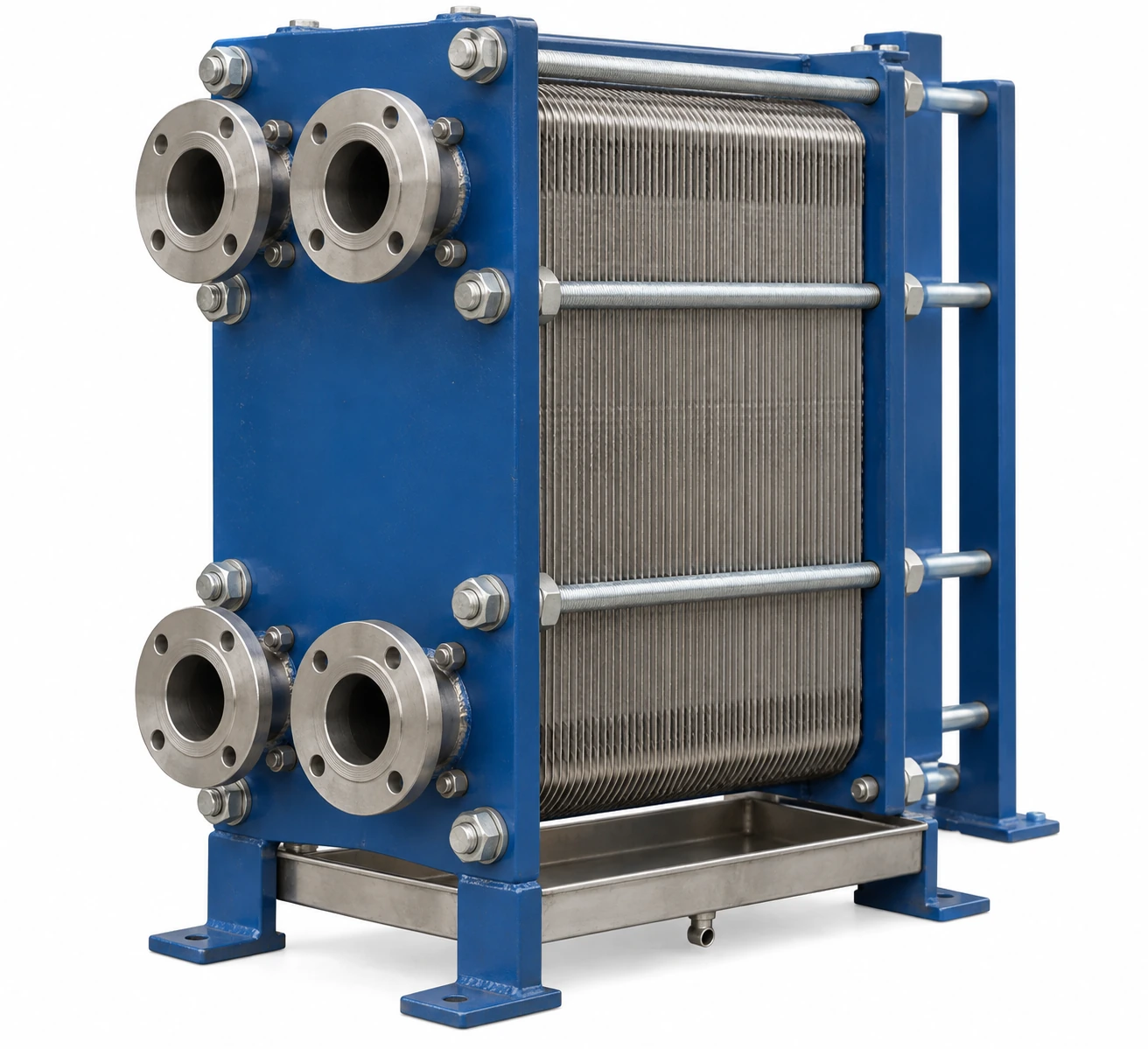
Plate Heat Exchangers
double wall plate heat exchanger
| Brand | shengtongJH |
|---|---|
| Construction choices | Paired-plate gasketed design; selected double-wall brazed alternative |
| Plate material | 316L stainless steel or an alloy matched to the fluids |
| Leakage provision | Design-specific external vent/drain path kept accessible |
| Gasket choices | Compatible EPDM / NBR for openable designs |
| Duty selection | Both fluid circuits and temperature programme; double-wall thermal calculation |
| Pressure selection | Common 10 / 16 bar gasketed enquiry classes; assembly-specific limits |
| Connections | DN25 / DN50 / DN65 or selected brazed fittings |
| Frame face classes | Approx. 330 × 950 / 500 × 1,100 mm, width × height |
| Pack depth | Double-wall arrangement and required plate count determine depth |
| Monitoring options | Accessible collection point and suitable leakage indication where specified |
Double-wall construction reduces particular cross-contamination risks but does not replace application-specific risk assessment, suitable monitoring or required approvals.
Plate construction, materials, leak indication and connections can be customized to the fluid-separation requirement.
A double wall plate heat exchanger uses paired separating walls and a defined external leakage path to help reveal certain wall failures before the two fluids mix. It is an additional design measure for specified duties, not a promise of absolute protection under every failure condition.
Understand the failure path
The purpose of the paired-wall arrangement is to provide an intermediate path that can lead a leak outward. That path must remain open and observable in the selected design. Blocking it with sealant, insulation or an unsuitable cover can defeat an important part of the arrangement.
The exact response depends on the construction and failure involved. Ask for the selected design's leakage arrangement rather than assuming every product labelled double wall works identically.
Define the separation requirement
Identify the consequences of the fluids mixing and the conditions under which the exchanger operates. Process additives, pressure differences and any required local approval belong in the enquiry. A material label or generic catalogue statement is not sufficient evidence of compliance for a specific application.
Make leakage noticeable
A visible path helps only when it can be inspected or monitored. Place collection and indication where operators can respond. Define how the system is isolated if a leak is detected, rather than treating the hardware as a complete operating procedure.
Allow for a different thermal selection
The paired-wall design changes the heat-transfer arrangement. Do not replace a single-wall unit with the same outer size and assume it has identical capacity or pressure loss. Select the double-wall assembly using the actual flow, temperatures and permitted pumping loss.
For an openable frame, confirm the plate sequence and service method. For a brazed version, identify cleaning provisions and the replacement route. Both need compatible materials and protection against operating conditions outside their selected limits.
Request evidence for the actual equipment
shengtongJH can coordinate sourcing against the specified separation duty and requested documentation. Where regulated or sensitive use is intended, the approval must apply to the supplied design and conditions. The page does not assign a universal sanitary approval or guarantee that cross-contamination is impossible.
Plate construction, materials, leak indication and connections can be customized to the fluid-separation requirement.