Operating Room Fixtures
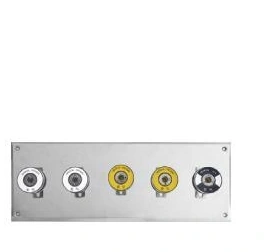
Medical Gas Outlet Panel
| Specification | Configuration options |
|---|---|
| Brand | shengtongJH |
| Outlet count | 1–6 service positions |
| Panel face, W × H (mm) | 200–1000 × 200; width selected for outlet layout |
| Services | Oxygen, medical air, surgical air, vacuum and other specified gas services |
| Probe interface options | BS, DIN or AFNOR; matched throughout the project |
| Copper-tail diameter options (mm) | 8 / 10 / 12 |
| Face / backbox | Stainless steel face; recessed or surface enclosure |
| Panel dimensions | Sized to outlet count, connection spacing and wall recess |
| Customization | Outlet order, labels, service count and mounting |
Dimensions and configurations can be customized for your application.
Place the required gas services behind one organized wall face, with each outlet identified and matched to the probes used in the facility.
Start with the equipment connections
List the equipment that will connect at this location, then specify each required gas service and probe interface. Similar-looking outlets are not necessarily compatible. The gas identity, connection standard and labeling must agree across the panel, pipeline and the equipment accessories used by staff.
Several outlets can be grouped in one panel, but grouping does not combine the gases. Each service retains its own dedicated connection. Outlet order should support a clear hose route and make identification easy when equipment is positioned in front of the wall.
A clean wall face with room behind it
Recessed installation keeps the front compact. It requires sufficient depth for the outlet body, pipework and service access. Surface installation can be practical when a finished wall cannot be opened, provided the projection does not interfere with circulation or equipment movement.
Allow a hand to reach the release
Choose spacing around the actual probes, hoses and attached regulators. A tightly packed row may look tidy before connection but be awkward to use. Keep access to the outlet release and ensure a hose cannot lever against an adjacent connector.
Connect the panel to a verified system
A correctly labeled faceplate is only one part of a safe installation. Competent specialists must verify the underlying pipeline connections and perform the applicable gas-identity, leakage, pressure and functional checks before clinical use. Do not select a probe by color alone or use adapters to conceal an interface mismatch.
The removable face and service arrangement should allow planned maintenance without damaging the surrounding cleanable finish. Keep records of the outlet specification so that replacement parts match. Gas positions, connection standards and the panel dimensions can be customized around the facility's medical gas and equipment schedule.