Operating Room Fixtures
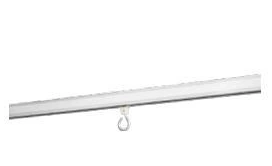
Ceiling-Mounted IV Rail
| Specification | Short run | Extended run |
|---|---|---|
| Brand | shengtongJH | |
| Rail length configurations (mm) | 1000 | 2000; custom runs available |
| Rail construction | Anodized aluminium with end stops | |
| Hanging accessories | Sliding carriers and compatible IV poles or hooks | |
| Route | Straight rail; curved layouts by project | |
| Support | Structural ceiling fixing or engineered suspension | |
| Carrier movement | Manual sliding with defined travel limits | |
| Customization | Rail route, suspension height and accessory arrangement | |
Dimensions and configurations can be customized for your application.
Provide a movable overhead hanging point for infusion accessories while keeping the floor around the treatment position available.
Recover floor space without losing access
An overhead IV rail moves the support point away from the floor, where mobile stands can compete with staff, trolleys and cleaning equipment. A sliding carrier allows the hanging position to be adjusted along the rail rather than relocating an entire floor stand.
The route should follow the working area. Consider where the patient or treatment position sits, where staff approach and how tubing will travel. A longer rail is not automatically better if its ends place suspended items in a doorway or across a circulation route.
Separate the rail, carrier and building support
These are three different parts of the load path. The rail supports the carrier; the carrier supports its compatible hanging accessory; the ceiling fixing transfers the load into the building. Their ratings and compatibility need to be established together. A ceiling tile or cleanroom panel should not be assumed to provide structural support.
Do not apply the load rating of another rail system to this assembly. The permitted load depends on the selected profile, fixing spacing, supports and accessories. End stops and carrier retention should prevent the trolley from leaving the intended track during normal movement.
Plan what happens above head height
Coordinate the track with lights, air terminals, ceiling pendants and curtains. Suspended components need sufficient clearance to move without colliding, and the route should allow staff to reach the adjustment mechanism without unsafe stretching.
Keep movement predictable
Inspect carriers, hooks and stops for wear, and keep the track accessible for the maintenance specified for its components. Do not use it as a lifting rail for patients or other unapproved loads. Rail length, support details and hanging arrangements can be customized for the intended care environment.