Flexible Air Ducts
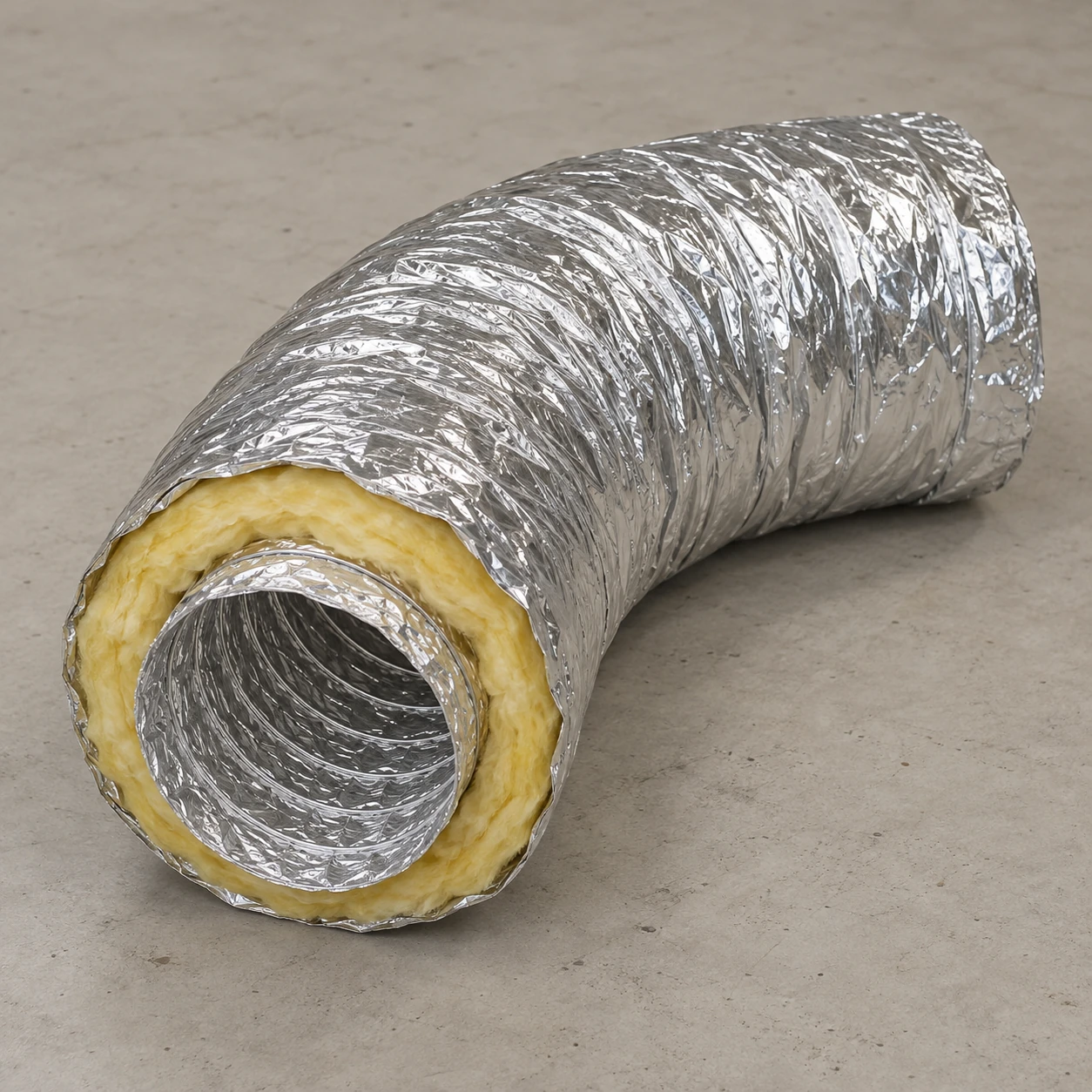
insulated flexible air duct
| Brand | shengtongJH |
|---|---|
| Bore choices | 152 / 203 / 254 / 305 / 406 mm |
| Liner | Wire-reinforced foil laminate; acoustic liner only when separately specified |
| Insulation choices | 25 mm glass-wool construction; thicker insulation by thermal selection |
| Outer envelope | For a 25 mm layer, allow approximately bore + 50 mm before fittings and tolerances |
| Vapour jacket | Continuous foil laminate with sealed terminations |
| Pack length | 10 m extended length or project cut lengths |
| Thermal performance | Select declared thermal resistance for the ordered construction |
| Support arrangement | Broad supports that retain roundness without crushing insulation |
| Connection hardware | Inner mechanical fastening plus separate outer-jacket closure |
| Air conditions | Cooling or heating duty, humidity and surrounding temperature stated with enquiry |
| Service access | Accessible collars and jacket repairs |
Insulation thickness alone is not an R-value. Condensation control depends on indoor humidity, air temperature, insulation continuity and jacket sealing.
Insulation level, bore, jacket construction and end fittings can be customized to the surrounding conditions and required air duty.
Insulated flexible air duct combines an air-carrying liner, thermal insulation and an outer vapour jacket. It is useful where conditioned air crosses a warmer or cooler service space and the duct surface must be protected against unwanted heat transfer and condensation.
Why an insulated duct can still drip
A cold air stream cools the liner. Insulation limits heat flow from the surrounding space, while the outer jacket restricts moisture reaching cold layers inside the assembly. A torn jacket, an unsealed end or a tightly compressed support can create a local weak point even when most of the duct looks well insulated.
Investigate where moisture first appears. Water around a collar suggests a termination problem; a wet patch beneath a narrow hanger points toward compression or jacket damage. Simply adding a wrap over a wet assembly can hide the original fault. Restore the intended thermal and vapour-control layers, replacing damaged insulation where necessary.
Choose insulation for the environment
A conditioned office ceiling and a humid industrial roof void do not impose the same surface-temperature requirement. Compare the surrounding air temperature and humidity with the coldest supply-air condition. Select the insulation performance needed for that combination, including periods when the equipment cycles off and the surrounding air remains humid.
Keep the layers doing separate jobs
The inner liner connection holds the airflow path together. The insulation continues the thermal layer, and the outer jacket closes the moisture barrier. Securing only the shiny outside sleeve can leave a loose inner duct hidden underneath. Use the selected manufacturer's termination method for the complete construction.
Leave space to repair it
A jacket pushed against sharp brackets is difficult to inspect and easy to puncture during other maintenance work. Place serviceable joints where they can be reached and protect the duct from contact with moving equipment. State both the clear bore and the available outside envelope in the purchase request; they are different dimensions, and both matter when a ceiling void is crowded.
Insulation level, bore, jacket construction and end fittings can be customized to the surrounding conditions and required air duty.