Fan Filter Units & Air Terminals
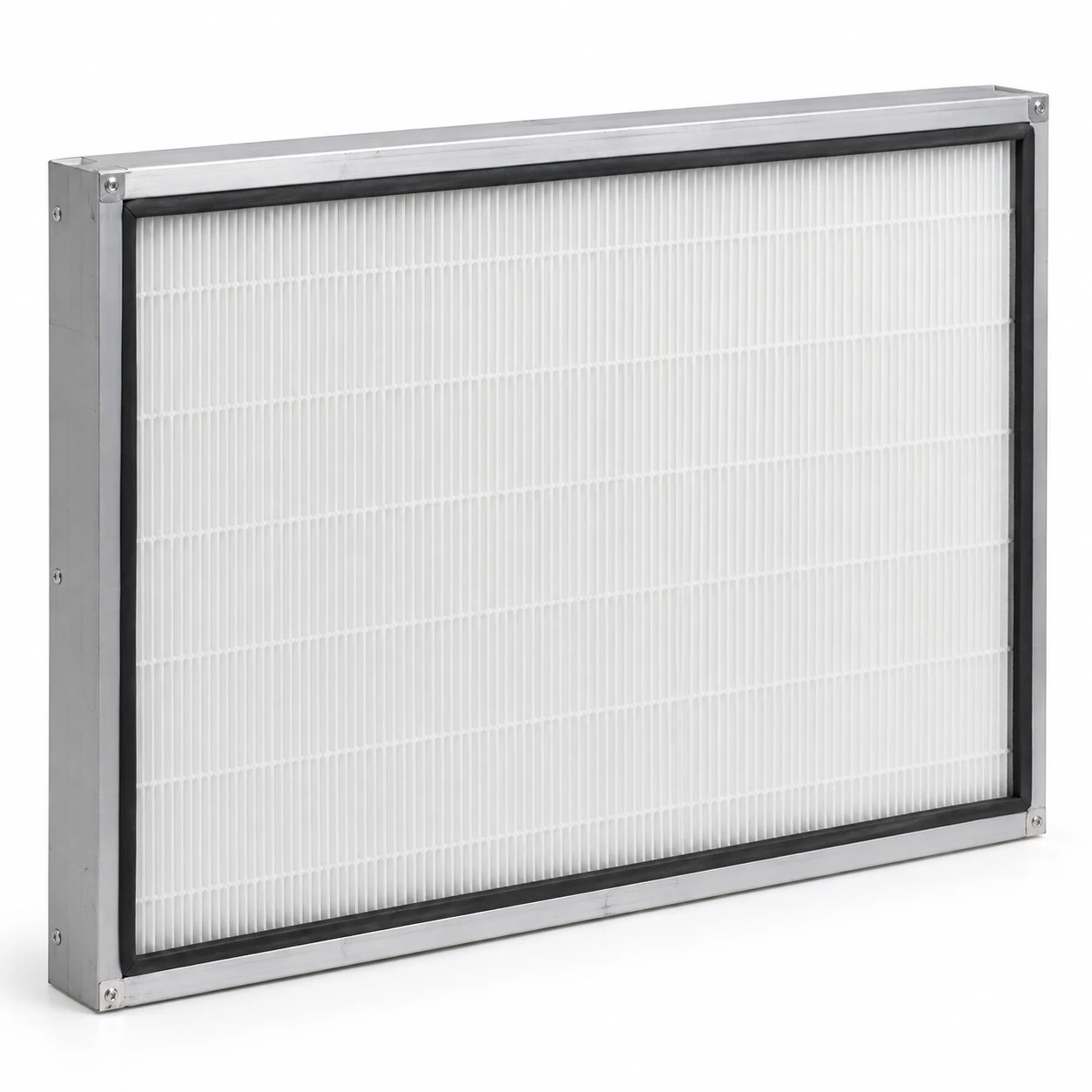
ffu hepa filter
| Brand | shengtongJH |
|---|---|
| Product | Replacement mini-pleat HEPA filter panel |
| Panel W × D × H options | 570 × 570 × 70 / 1170 × 570 × 70 / 1170 × 870 × 70 / 1170 × 1170 × 70 mm |
| Frame options | Aluminium extrusion; stainless steel where required |
| Media | Fine-fibre mini-pleat media selected for the duty |
| Class options | H13 or H14 to EN 1822 |
| Integral efficiency criterion | H13 ≥99.95%; H14 ≥99.995%, at MPPS |
| Seal | Continuous gasket; compatible gel-seal version by selection |
| Face protection | Protective grid where specified |
| Pressure requirement | Resistance curve at the intended FFU airflow |
| Identification | Individual filter identity and matching test documentation |
| Replacement interface | Frame depth, sealing face and retaining method matched to the housing |
Efficiency figures are filter classification criteria, not complete FFU or room-performance guarantees. Confirm all replacement dimensions against the actual filter seat.
Filter dimensions, frame, protective grid and sealing arrangement can be customized to the FFU housing and process requirements.
An FFU HEPA filter is the replaceable final-filter element beneath the fan module. This page covers the filter panel itself, including its frame and seal, rather than a complete powered FFU.
A replacement has to fit in more than two dimensions
The frame length and width are only the starting point. Check depth, gasket position, retaining tabs and the direction from which the panel is removed. A replacement with the correct outline can still leak if the seal contacts the wrong part of the housing.
Read the existing filter label and inspect its interface before ordering. Photographs of the seat and retaining hardware are often more useful than the FFU's nominal ceiling size. Do not use the outer dimensions of the fan casing as the filter size.
Keep efficiency and resistance together
H13 and H14 describe defined filtration classes. They are not interchangeable claims that every offered panel has identical airflow resistance. Ask for the selected element's test identity and pressure curve. The fan must be able to deliver the intended air volume through that element as well as the rest of the intake path.
A stronger fan setting may restore flow after replacement, but it also changes the operating condition. Check the useful air delivery rather than assuming that the previous controller position remains correct. The EN 1822 classification explanation describes the distinction between integral efficiency and local leakage.
Handle the frame, protect the media
Keep the panel packaged until the work area is ready. Lift by the frame and keep tools away from the pleats. A protective face grid helps handling but is not a load-bearing surface. Do not wash disposable HEPA media or use compressed air to clean it unless the original manufacturer specifically permits that method.
Restore the filtration boundary
Clean the accessible seating surface, inspect the seal and secure the replacement evenly. Any required installed integrity test should cover the media and its perimeter. A factory test report accompanies the filter; it cannot reveal a seal damaged during installation.
Plan replacement from condition
Use operating resistance, airflow, physical condition and process requirements to decide service timing. Calendar age alone does not reveal a damaged seal, while differential pressure alone does not prove leak-free operation. Keep the new filter identity with the maintenance record for the next replacement.
Filter dimensions, frame, protective grid and sealing arrangement can be customized to the FFU housing and process requirements.