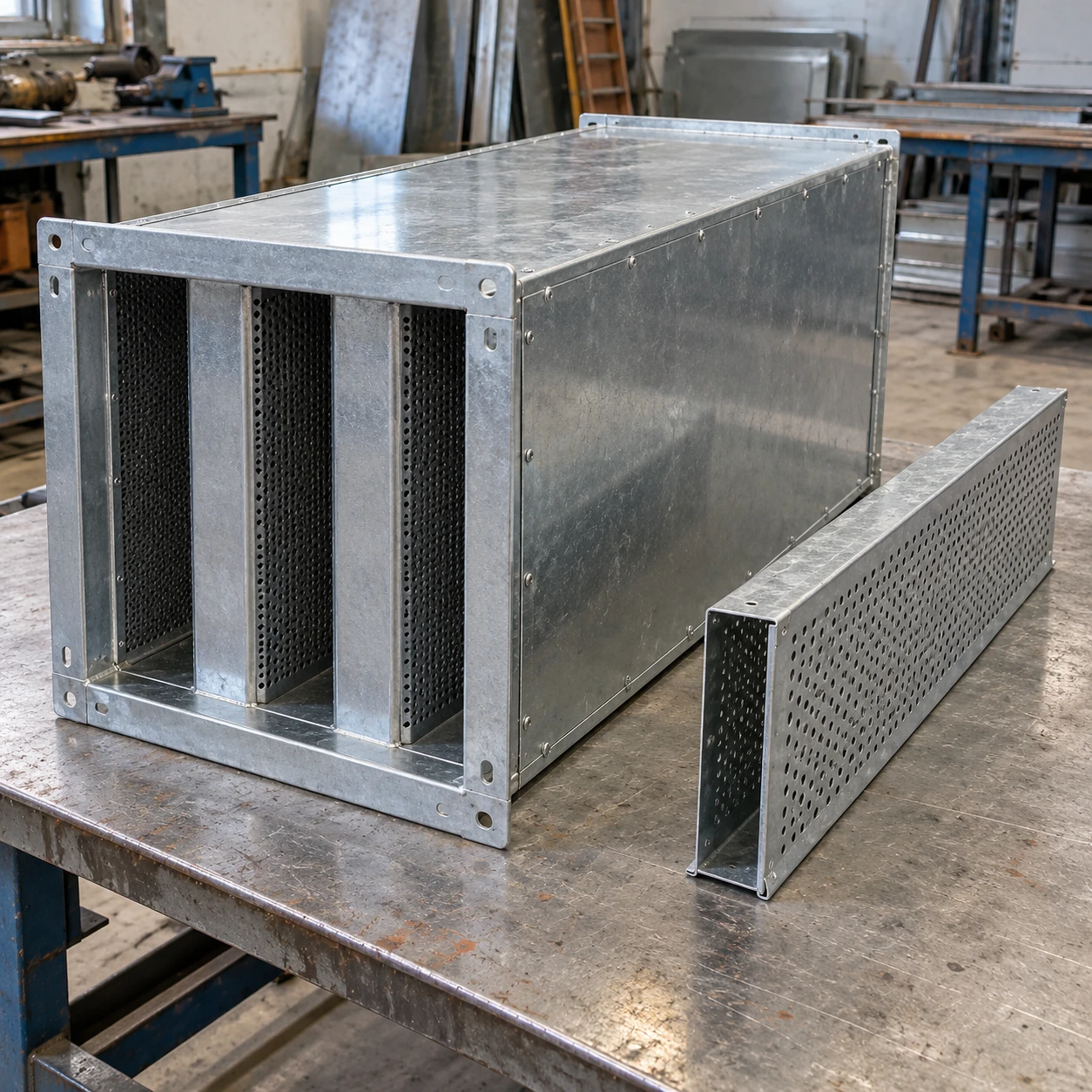
Duct Silencers
duct silencer manufacturers
| Brand | shengtongJH |
|---|---|
| Supply scope | Sourcing of rectangular or circular ventilation silencers |
| Rectangular connection options | 300 × 300 / 500 × 400 / 800 × 600 mm W × H |
| Rectangular lengths | 500 / 1000 / 1500 mm |
| Circular bore options | 160 / 200 / 250 / 315 mm |
| Casing alternatives | Galvanized steel or specified stainless steel |
| Acoustic construction | Protected absorptive lining or splitter arrangement selected for duty |
| Interface documentation | Approved opening, overall envelope and flange or spigot drawing |
| Performance documentation | Frequency-band insertion loss, pressure loss and regenerated noise for the selected duty |
| Inspection scope | Dimensions, construction, lining protection and agreed supplied accessories |
| Customization | Dimensions, materials and connection arrangements within the selected construction |
The listed sizes are sourcing options. Certification, acoustic results and material grades must correspond to the actual offered assembly and agreed order.
Product dimensions, construction, documentation and accessory scope can be customized to the project purchasing requirements.
When comparing duct silencer manufacturers, evaluate the proposed construction and its supporting data together. shengtongJH operates as a sourcing and trading supplier, coordinating a defined purchase rather than claiming that every product is made in its own factory.
Compare equivalent technical offers
A low price may cover only a galvanized casing, while another offer includes protected baffles, matching flanges and documented acoustic selection. Set out the required construction and accessories before comparing prices. Otherwise the apparent difference may reflect scope rather than value.
Ask each proposed manufacturer to identify the exact geometry behind the acoustic data. A test for a longer unit or different splitter spacing does not automatically establish the performance of the unit being offered. Airflow and inlet assumptions also matter when comparing pressure loss and regenerated noise.
Look for construction details that affect service
Check how the absorbent material is retained, how exposed surfaces are protected and how the casing is stiffened. Confirm that inspection and cleaning are practical for the air service. These details help prevent a product that looks acceptable at delivery from becoming difficult to maintain once installed.
Acoustic evidence
Request relevant frequency-band information with the test or calculation basis identified. Avoid treating an unexplained overall decibel claim as a complete engineering selection.
Material identity
Specify the required casing and air-facing materials. If a particular grade or coating is essential, include suitable documentation in the order rather than relying on a general description such as corrosion resistant.
Delivery boundaries
List transitions, seals, insulation and support accessories explicitly. Agree the delivery envelope and handling requirements so a complete-looking quotation does not conceal missing installation components.
Keep procurement responsibility clear
shengtongJH can coordinate sourcing against an agreed specification and product identity. Project acoustic design, structural supports and site installation responsibilities should still be assigned clearly. Supplier photographs are not proof of a particular tested duty, and a request for certification is not evidence that an unspecified assembly already holds it.
Before releasing the order, resolve drawing differences and retain the accepted technical documents. This provides a traceable basis for receiving inspection and later replacement instead of leaving important decisions to the installation crew.
Product dimensions, construction, documentation and accessory scope can be customized to the project purchasing requirements.