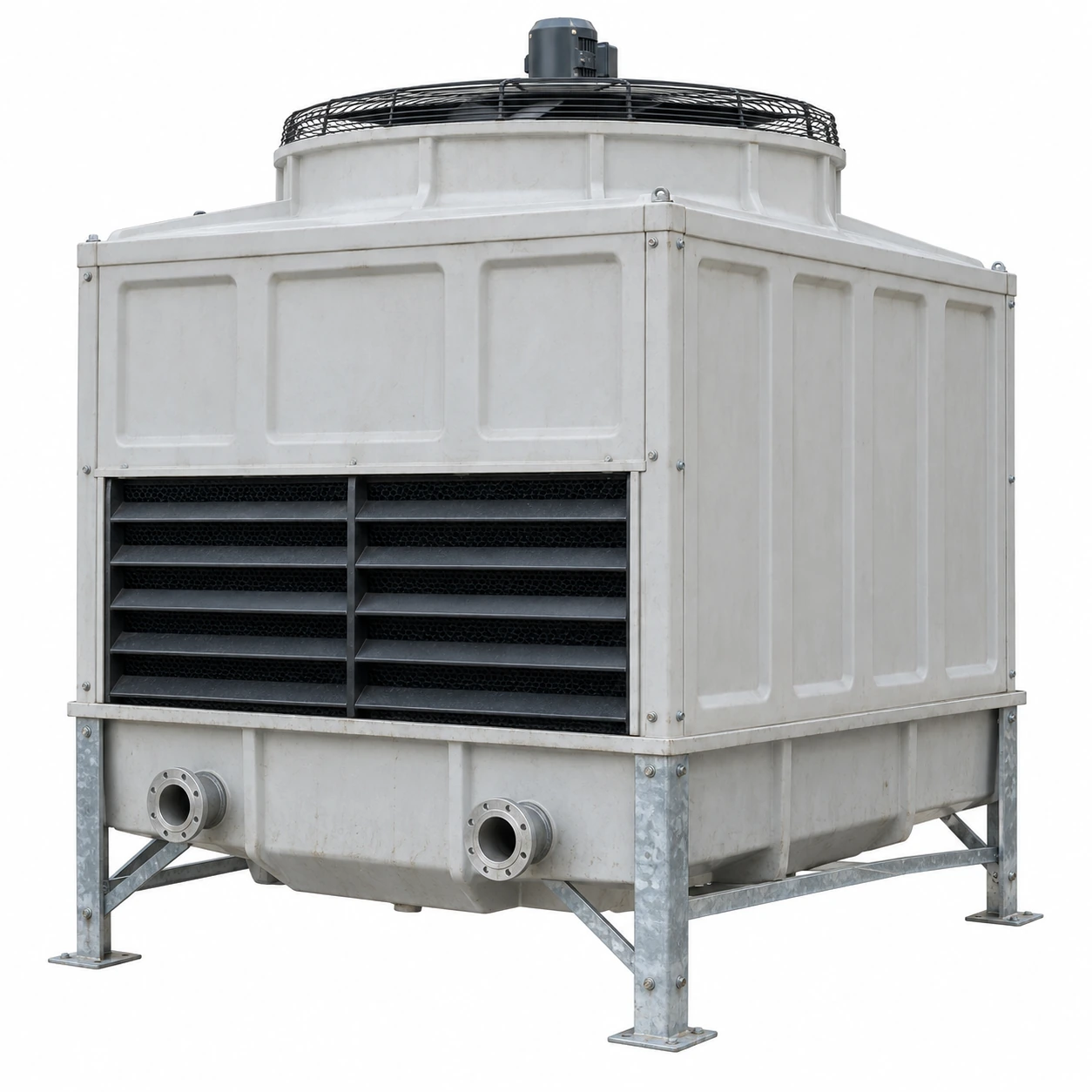
Cooling Towers
hvac cooling tower
| Brand | shengtongJH |
|---|---|
| Arrangement | Single-cell or multiple-cell induced-draft tower |
| Service | Water-cooled chiller condenser-water circuit |
| Selection duty | Condenser heat rejection at design and part-load conditions |
| Temperature selection | 35/30°C or 37/32°C entering/leaving water; entering-air wet bulb specified separately |
| Cell envelope classes | Approx. 3,300 × 1,800 × 3,500 / 4,100 × 2,600 × 4,100 mm, W × D × H |
| Fan options | 1.5 / 4 / 7.5 kW per selected cell; variable-speed option |
| Construction | FRP or coated steel enclosure; galvanized or stainless wetted components |
| Power supply | 380–415 V, 3-phase, 50 Hz; other supplies by selection |
| Controls | Leaving-water sensor, fan staging, low-level alarm and plant enable |
| Installation options | Vibration isolation, access platform, basin heater and noise-control package |
Condenser duty includes the heat delivered to the condenser, not just nominal chiller cooling capacity. Noise, wet weight and support loads require the selected equipment data.
Cell arrangement, materials, acoustic options and building-control interfaces can be customized for the central plant.
An HVAC cooling tower serves the condenser-water side of a water-cooled central plant. Its selection affects chiller operation, rooftop installation and day-to-day maintenance, so the tower and chiller need a coordinated operating envelope.
Match the chiller, not just the roof space
A water-cooled chiller rejects the building cooling load together with compressor heat through its condenser. Selecting a tower by matching the chiller's nominal refrigeration tonnage can therefore miss the actual heat-rejection duty. Obtain the condenser-water selection from the chiller supplier and use the same temperatures and flow when comparing towers.
During cooler weather, the lowest possible water temperature is not automatically the right control target. The chiller has operating limits. Coordinate tower fan control, any bypass arrangement and plant sequencing so the system stays within those limits without unnecessary fan operation.
Three questions before a rooftop replacement
Can the structure carry it?
Review wet operating weight, support positions and dynamic loads. Existing steelwork may not match a replacement basin even when the overall footprint is similar.
Can it breathe?
Assess screens, parapets, neighboring discharge and prevailing wind. An architectural enclosure should not force moist exhaust back into the tower inlet.
Can it be maintained?
Check crane access, replacement-fan handling, safe walkways and basin cleaning. Retain access after pipes and acoustic treatments are installed.
Several cells require a sequence
Multiple cells can accommodate changing plant load, but each active cell needs adequate water distribution. Spreading low flow across every cell may wet the fill unevenly. Coordinate isolation valves, basin equalisation, pump operation and fan commands rather than adding fans independently to the building controls.
What a replacement enquiry should contain
Share the existing tower arrangement, chiller condenser data, roof access limits and required noise assessment locations. Include the expected operating hours and any periods when cooling cannot stop. These details support an equipment comparison that considers installation disruption and maintenance as well as initial dimensions.
The water-treatment arrangement remains part of the operating system. Specify make-up, blowdown and access for cleaning alongside the tower purchase, particularly where seasonal shutdown is expected.
Cell arrangement, materials, acoustic options and building-control interfaces can be customized for the central plant.