Cleanroom Wall & Ceiling Systems
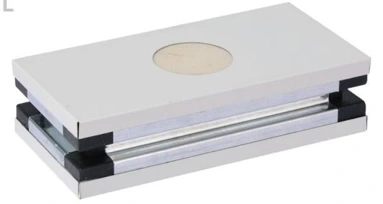
Polyurethane Cleanroom Panel
| Specification | Configuration options |
|---|---|
| Brand | shengtongJH |
| Core material | Rigid polyurethane foam |
| Panel thickness (mm) | 50 / 75 / 100 |
| Module width (mm) | 980 / 1180; project-cut infill widths |
| Panel length (mm) | 2400 / 3000 / 4000; cut to room layout |
| Metal facing thickness (mm) | 0.4–0.8 |
| Facing options | Prepainted steel or stainless steel |
| Connections | Sealed tongue-and-groove or framed joints |
| Customization | Panel size, openings, facing and junction details to suit the application |
Dimensions and configurations can be customized for your application.
Reduce heat transfer across the room boundary with an insulated polyurethane core and carefully coordinated panel connections.
Insulation works as a continuous envelope
The polyurethane core reduces heat transfer through the main area of the panel. This makes the panel useful where a controlled room operates at a different temperature from the surrounding building. The greatest practical benefit comes when doors, ceilings, service entries and wall joints are designed as part of the same boundary.
A thicker insulating core cannot correct a leaking door or an uninsulated metal connection. Review the room's operating temperature and humidity on both sides of the enclosure. The coldest accessible surfaces are the places where condensation is most likely to create cleaning and durability problems.
Trace the interruptions
Frames, fasteners and equipment penetrations can provide a shorter heat path through the wall. Keep services grouped where appropriate and use coordinated insulated closures. Around chilled spaces, the vapour-control detail needs particular attention at panel ends and openings.
Close joints without hidden gaps
Engage panel connections fully and maintain the specified joint width. Seal on prepared surfaces and avoid concealing a poorly fitted edge beneath a wide bead. A continuous finish makes later inspection more straightforward and reduces places where moisture can enter.
Choose the surface for everyday use
The metal facing encounters people, equipment and cleaning agents. Select its finish for those conditions; the insulating core does not determine chemical resistance or scratch resistance. Protect traffic areas and support mounted equipment through designed reinforcement rather than the face sheet alone.
Polyurethane is not interchangeable with mineral-core construction for fire design. Any required classification must cover the actual panel assembly, joints and openings. Ceiling access loads also require their own support design.
Panel dimensions, metal facings and insulated junction details can be customized around the room temperature, cleaning method and installation layout.