Cleanroom Tables, Benches & Stools
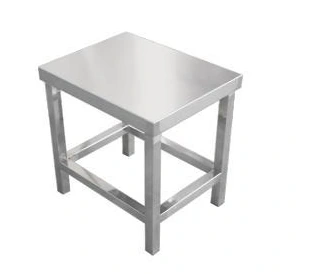
Stainless Steel Cleanroom Stool
| Specification | Configuration options |
|---|---|
| Brand | shengtongJH |
| Material | 304 stainless steel |
| Seat W × D (mm) | 300 × 300 / 350 × 350 / 400 × 400 |
| Seat height (mm) | 450 / 500 / 600 |
| Frame | Four-leg braced frame |
| Seat finish | Smooth solid top with rounded edges |
| Feet | Fixed non-marking feet or leveling option |
| Customization | Seat dimensions, height and frame arrangement |
Dimensions and configurations can be customized for your application.
Add a compact seated position where a simple, cleanable frame suits the task better than a large upholstered chair.
Choose seating from the work height
A stainless steel stool offers a compact seat with surfaces that can be reached for wiping. It can suit short-duration tasks, changing positions or workstations where space is limited. The simple open frame avoids a large backrest and bulky upholstery, but it provides a different level of support from an adjustable task chair.
Match the seat height to the work surface and the operator's reach. A stool that is too low raises the shoulders during fine work; one that is too high can leave the feet unsupported. Consider the duration of the task and whether a supported chair or a footrest is needed rather than selecting a stool only because it fits under the bench.
Keep movement and cleaning practical
The stool should slide out far enough for the user to sit without colliding with drawers, lower shelves or nearby people. Check knee space at the workstation. Place it on an even surface and make sure all feet remain in contact with the floor under normal use.
The solid top is straightforward to wipe, while bracing and underside junctions also need attention. Choose cleaning agents that suit the stainless surface and the feet. Inspect edges for damage that could snag gloves or clothing, and replace worn foot pads before the frame marks the floor.
Use a seat as a seat
A stool should not become an improvised step for reaching shelves. If access at height is required, select purpose-designed access steps with the appropriate platform and supports. Likewise, a stainless frame does not automatically provide an ESD-controlled seating system; that requirement needs an engineered electrical path.
Confirm the intended user load and service conditions when specifying the construction. Seat dimensions, height and foot details can be customized to the workstation and the way it is used.