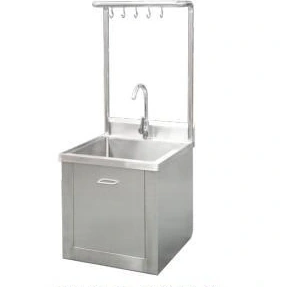
Cleanroom Sinks & Wash Stations
Stainless Steel Mop Sink
| Specification | Configuration options |
|---|---|
| Brand | shengtongJH |
| Material | 304 stainless steel |
| Base unit, W × D × H (mm) | 500 × 500 × 600 / 600 × 600 × 700 / 800 × 600 × 750; hanging rail additional |
| Bowl depth (mm) | 250 / 300 / 400 |
| Hanging arrangement | Over-basin frame with separated hooks |
| Water outlet | Fixed spout or hose connection with suitable backflow protection |
| Drainage | Accessible waste and strainer arrangement |
| Customization | Bowl depth, rail height, hook spacing and plumbing |
Dimensions and configurations can be customized for your application.
Give cleaning tools their own washing and draining point, away from basins used for hands or production items.
Separate cleaning-tool work from other washing
A mop sink provides a dedicated place to rinse cleaning tools, empty suitable wash water and suspend items above a basin. This avoids using a handwash or product-washing sink for tools that have been in contact with floors. Position it within the cleaning workflow, with enough room for the bucket or trolley that brings the tools to the station.
The hanging frame keeps handles organized and directs drips towards the bowl. Space hooks so wet mop heads do not press against one another or the wall. Hanging a mop does not establish that it is dry or microbiologically suitable for reuse; follow the site's laundering, drying and storage procedure.
Lift and empty
Choose the rim height and bowl opening around the actual bucket. Check the reach required to tip it without contacting the tap or hanging rail. Heavy containers may need a lower disposal point or assisted handling.
Drain and inspect
A removable strainer helps retain debris before it enters the pipework. Keep the trap accessible and avoid routing discharge where it can wet nearby storage or create a slipping hazard.
Organize tools by their assigned zone
If the facility separates cleaning tools by room or contamination risk, keep that separation at the sink as well. Use distinct hook positions or separate stations and avoid combining incompatible chemical residues. A hose connection needs the backflow protection appropriate to the water system and its local installation requirements.
Clean the bowl, rail joints and surfaces underneath the frame after use. Remove stagnant water and inspect hooks for damage that could snag handles or gloves. Basin dimensions, hanging height and service connections can be customized to the cleaning equipment and room layout.