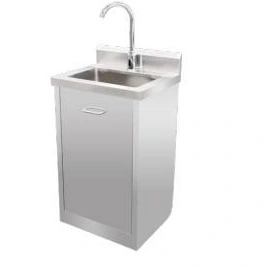
Cabinet sink with a sensor tap
Cleanroom Sinks & Wash Stations
Hands-Free Stainless Steel Handwash Sink
| Specification | Configuration options |
|---|---|
| Brand | shengtongJH |
| Material | 304 stainless steel |
| External size, W × D × H (mm) | 500 × 550 × 875 / 600 × 550 × 875 / 700 × 600 × 900; tap and splashback additional |
| Bowl depth (mm) | 150 / 200 / 250 |
| Tap operation | Infrared sensor, foot pedal or knee valve |
| Water temperature | Single supply or mixed-water valve arrangement |
| Drying options | Separate hand dryer or combined washing/drying fixture |
| Base access | Hinged or sliding service panel |
| Customization | Bowl form, control position, plumbing and drying layout |
Dimensions and configurations can be customized for your application.
Make the washing sequence easier to follow without returning clean hands to a manually operated tap.
Choose the control people can use naturally
A hands-free sink reduces the need to touch a tap after washing. Sensor operation starts flow when hands enter the detection area. Foot and knee valves provide physical control without using the fingers, which can be useful when the facility prefers a simple mechanical arrangement. Choose the method for the people, clothing and space at the station.
The gallery includes sensor spouts, foot-operated plumbing, sliding-door bases and arrangements with drying equipment. A knee valve can be specified as another control option. It should be positioned for a natural stance rather than added where the operator must twist or lean to reach it.
Make the complete routine fit the basin
Place soap, water, drying and waste disposal in a sequence that avoids dripping across the floor. The spout should discharge into a suitable part of the bowl, with enough room for both hands. A sensor aimed poorly at reflective steel or passing movement can make operation frustrating, so confirm detection under the installed lighting and actual user position.
Where a dryer is included, consider where its air and droplets travel. Keep the drying position away from exposed clean materials, and choose the arrangement according to the site's hygiene assessment. A washing fixture should not be treated as a substitute for the full hand-hygiene procedure.
Keep service access simple
Sensor power supplies, solenoid valves, mixing valves and traps need accessible service space. Check whether the selected electronics use battery or mains power and retain an appropriate route for replacement and isolation.
Inspect pedal or knee-valve movement, clean the sensor window and check leaks during routine maintenance. Control type, basin dimensions and drying accessories can be customized to the entry sequence and available services.