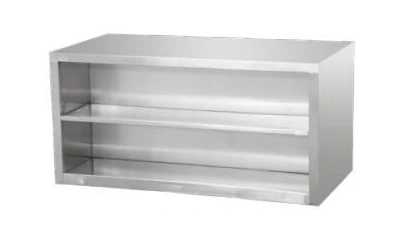
Open stainless footwear shelf
Cleanroom Shoe Storage & Crossover Benches
Open Cleanroom Shoe Rack
| Specification | Configuration options |
|---|---|
| Brand | shengtongJH |
| Material | 304 stainless steel |
| External size, W × D × H (mm) | 900 × 400 × 600 / 1200 × 400 × 600 / 1500 × 400 × 900 |
| Storage layout | Open shelves or divided cubbies; two or three tiers |
| Compartment clear width (mm) | 250 / 280 / 300, selected to actual footwear |
| Base | Closed base or adjustable feet |
| Finish | Smooth brushed stainless surfaces |
| Customization | Rack length, tier count, compartment spacing and base |
Dimensions and configurations can be customized for your application.
Make assigned footwear easy to find while keeping shoes off the floor and clear of circulation routes.
Find the right pair without opening a row of doors
An open shoe rack makes footwear visible at the changing point. Staff can see assigned positions, identify missing pairs and return shoes without handling locks or cabinet doors. It suits routines where convenient retrieval and straightforward cleaning are more important than enclosed individual storage.
The catalogue includes continuous shelves, divided compartments and a three-tier cubby arrangement. Continuous shelves accommodate a wider variety of footwear, while dividers help preserve individual allocations and stop pairs being pushed along the shelf. Neither arrangement should be filled so tightly that shoes overlap or project into the aisle.
Size the space around the footwear
Check the largest boot or shoe used on site, including its sole width and height. A compartment that fits ordinary shoes may be too short for a taller cleanroom boot. Leave enough room to remove footwear by hand without pulling the adjacent pair onto the floor.
Decide whether shoes are stored toe-first, heel-first or in a dedicated left/right allocation. The same routine should apply across the row so staff do not repeatedly turn used soles towards clean storage surfaces. Store outside footwear separately from clean footwear where the gowning process requires that division.
Keep the storage area visible
An open arrangement makes debris easier to notice, but it also exposes shoes to the room. Position the rack away from uncontrolled dust, splash and frequently handled packaging. Avoid using its top as a general shelf for bags.
Empty compartments systematically for cleaning, including the underside and rear junctions. A low rack is not a seat unless it has been designed for that use. Rack dimensions, tier spacing and compartment layout can be customized to the footwear and changing-room sequence.