Cleanroom Shoe Storage & Crossover Benches
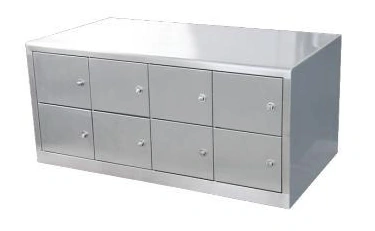
Compartment Cleanroom Shoe Cabinet
| Specification | Configuration options |
|---|---|
| Brand | shengtongJH |
| Material | 304 stainless steel |
| External size, W × D × H (mm) | 900 × 400 × 600 / 1200 × 450 × 700 / 1500 × 450 × 900 |
| Door layout | 6 / 8 / 12 individual compartments |
| Compartment width (mm) | 250 / 280 / 300 clear options |
| Hardware | Recessed pulls or locks; numbered positions optional |
| Ventilation | Passive openings where specified; no powered extraction as standard |
| Customization | Door arrangement, compartment size and allocation labels |
Dimensions and configurations can be customized for your application.
Separate footwear into assigned compartments when open shelving does not provide the required organization or enclosure.
Give each pair a defined enclosure
A compartment shoe cabinet helps keep footwear assigned and separated. Individual doors reduce casual contact between neighboring pairs and create a more orderly changing area than a continuous open shelf. This can be useful where multiple teams share a room or where returned footwear needs a clearly identified location.
The enclosure is a storage boundary, not a cleaning treatment. Used shoes must still follow the facility's cleaning and release procedure before being placed in a clean-designated compartment. Do not alternate clean and dirty use within one compartment without the required cleaning step.
Balance capacity with practical access
Increasing the door count makes each compartment smaller unless the cabinet grows. Check shoe length, boot height and the space needed to grasp the pair. Tight compartments encourage users to force footwear against hinges or leave doors open, which weakens the intended organization.
Arrange numbers or assignments so users can find their space without searching every door. The lower tier should be reachable without blocking the path, and door swings should stay clear of benches and the feet of seated operators. Choose locks only when controlled access is needed; unnecessary locking can slow a busy changing sequence.
Avoid storing moisture behind closed doors
Clean or dry footwear according to the site procedure before enclosed storage. Passive vent openings may support air exchange, but they do not provide a defined drying cycle. For an active extract requirement, use a ventilated cabinet with a designed duct connection.
During routine cleaning, inspect door edges, internal corners and the base beneath each compartment. Keep the cabinet stable and avoid using its top for standing or seating unless specifically designed for that purpose. Cabinet dimensions, door count and compartment organization can be customized to your footwear range.