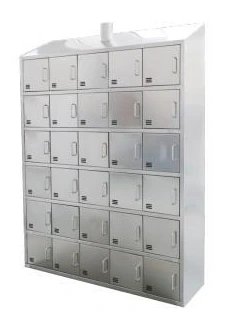
Cleanroom Lockers & Garment Cabinets
Ventilated Cleanroom Locker
| Specification | Configuration options |
|---|---|
| Brand | shengtongJH |
| Cabinet material | 304 stainless steel |
| External size, W × D × H (mm) | 1200 × 500 × 1800 / 1500 × 500 × 1800 / 1800 × 600 × 2000; exhaust connection additional |
| Compartments | 12 / 20 / 30, with layout selected to stored items |
| Ventilation | Duct-connected extract with inlet and transfer openings |
| Doors | Individual hinged doors with mechanical or electronic locks |
| Air connection | Top outlet position and duct diameter matched to building extract |
| Customization | Locker count, compartment depth, duct position and door arrangement |
Dimensions and configurations can be customized for your application.
Provide individual garment storage with an arranged exhaust path instead of leaving densely occupied lockers without air exchange.
Give storage air a route out
Closely packed garments and footwear can make an enclosed locker unpleasant to use, particularly when damp items are returned after a shift. A ventilated locker connects multiple compartments to an arranged extract path. Air enters through designated openings, passes through the storage spaces and leaves through the cabinet outlet.
The connection must form part of a working ventilation system. An outlet on the cabinet does not create airflow by itself. The selected extract arrangement needs to overcome the resistance of the cabinet, transfer openings and connecting duct without unnecessarily disturbing the pressure relationship of the changing room.
Compartment use
Allocate space so clothing does not cover the air openings. Oversized bags packed tightly against the rear panel can leave neighboring compartments ventilated while blocking the occupied one. More compartments are useful only when each retains enough room for the actual items.
Extraction interface
Position the outlet where ductwork can be fitted and cleaned. Allow access above the cabinet, keep removable panels reachable, and consider whether several cabinets will share a branch. The airflow balance should be checked with the doors in their normal operating position.
Keep ventilation distinct from garment treatment
Extract ventilation helps remove storage air; it is not a sterilization cycle and does not make used garments clean. Wet clothing still needs an appropriate laundering or drying process. Return clean garments and used garments through separate routines rather than relying on extraction to compensate for mixed storage.
During maintenance, check vents for lint, inspect duct joints and verify that cabinet doors close without obstructing transfer paths. A change in odor or airflow should prompt inspection of the system rather than simply increasing a timer. Cabinet size, compartment count and the exhaust connection can be customized to the room and daily changing pattern.