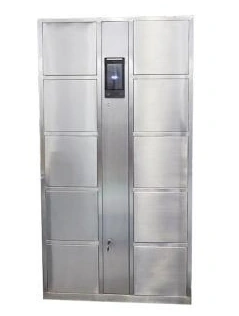
Cleanroom Lockers & Garment Cabinets
Access-Controlled Cleanroom Locker
| Specification | Configuration options |
|---|---|
| Brand | shengtongJH |
| Housing | 304 stainless steel |
| External size, W × D × H (mm) | 900 × 500 × 1800 / 1200 × 500 × 1800 / 1500 × 600 × 2000 |
| Compartments | 6 / 10 / 12, with individual locks |
| Access methods | PIN, access card or face-recognition interface, as specified |
| Allocation | Assigned compartments or managed shared-use configuration |
| Service access | Controller access and authorized emergency release |
| Customization | Door count, credentials, power arrangement and system interface |
Dimensions and configurations can be customized for your application.
Organize personal storage when keys, shift changes and shared compartments make a conventional locker difficult to manage.
Resolve access without complicating gowning
An electronically managed locker gives staff a defined way to open their storage without distributing a separate physical key for every compartment. It can support permanently assigned lockers or a shared pool used across shifts. The choice affects the control arrangement: an assigned cabinet remembers a person's compartment, while a shared cabinet needs a clear release and reallocation procedure.
The catalogue shows a cabinet with a central face-recognition terminal. Card and PIN interfaces can also be considered where gloves, masks, privacy requirements or the site's existing credentials make them more practical. The appropriate method is the one that works at the point where the locker is used, before or during changing.
Plan for ordinary exceptions
A forgotten credential
An authorized supervisor should be able to help without exposing every other person's belongings. Define the recovery process and who may operate the override.
A power interruption
Select the lock behavior, backup supply and service access around the facility's routine. Staff must understand how stored clothing is retrieved when the controller is unavailable.
A staff change
Account removal and reassignment matter as much as first enrollment. Confirm how permissions are updated and whether the system is local or connected to site management.
Keep the cabinet maintainable
Controller housings, lock wiring and readers should remain accessible for servicing without dismantling adjacent lockers. Locate the terminal where queues do not obstruct entry doors, and use a cleaning method compatible with the screen and reader as well as the steel body.
Electronic access manages who opens a compartment; it does not establish garment cleanliness or certify room entry. Keep gowning procedures and access permissions coordinated. Dimensions, compartment allocation and access hardware can be customized for your shift pattern and facility system.