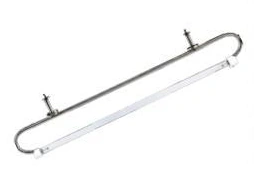
Bent-arm UV fixture
Cleanroom Lighting
UV-C Disinfection Light Fixture
| Specification | Configuration options |
|---|---|
| Brand | shengtongJH |
| Lamp power options | 15 W / 30 W / 36 W |
| UV source | Low-pressure UV-C lamp; nominal 254 nm selected lamp |
| Fixture forms | Suspended bent-arm, straight-edge and angled-edge housings |
| Nominal lamp-length classes (mm) | Approximately450 /900 /1200; exact holder geometry by lamp |
| Control options | Timer, keyed enable and access interlock |
| Electrical arrangement | Lamp-compatible ballast; project-selected supply |
| Operating condition | Controlled unoccupied exposure area; safeguards required |
Dimensions and configurations can be customized for your application.
Provide a dedicated UV-C source for a controlled disinfection process, with exposure safeguards and a validated operating arrangement.
Use UV-C as a controlled process
A UV-C fixture delivers ultraviolet radiation rather than ordinary working light. Its effectiveness depends on the delivered dose at the target, exposure time, distance, shadowing and the condition of the lamp. Electrical wattage alone does not establish a disinfection result.
Objects outside the direct exposure path or behind other items can receive much less radiation. A room layout therefore needs to be evaluated for the intended treatment, and the process must be validated for its actual target and conditions. Do not replace required cleaning with an assumed lamp effect.
Prevent unintended exposure
Direct UV-C exposure can injure eyes and skin. Open fixtures require engineered access controls and an operating procedure that prevents people from being exposed. A timer by itself does not confirm that the area is empty or that someone cannot enter during operation.
Specify the enable controls, warning indication and interlocks as a complete arrangement. Consider reflected radiation and adjacent accessible areas when assessing the installation. These open UV-C fixtures must not operate where people can be exposed.
Match the lamp to the fixture
The lamp, holder and ballast must be compatible. Straight and angled housings suit different mounting positions, while a suspended arrangement needs stable support. Confirm whether the selected lamp produces ozone and account for that characteristic in the process design.
Maintain the exposure system
Deposits, ageing and damaged components can change output. Follow the lamp's cleaning, replacement and disposal requirements, and check the safeguards during maintenance. Housing, mounting and controls can be customized for the defined treatment process.