Cleanroom Lighting
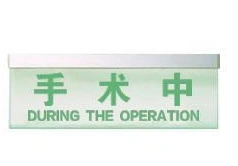
Operating Room Status Indicator Light
| Specification | Configuration options |
|---|---|
| Brand | shengtongJH |
| Display format | Single-sided wall sign or double-sided projecting sign |
| Light source | LED backlight |
| Message options | Operation in progress / Do not enter / project-specific English wording |
| Supply options | 12–24 V DC or 120–277 V AC, matched to the selected assembly |
| Control interface | Switched supply or compatible relay input |
| Enclosure size, W × H × D (mm) | 178 × 178 × 64 or 279 × 203 × 64; custom message formats |
| Housing | Metal frame with illuminated diffuser |
| Customization | Message, mounting, dimensions and control signal |
Dimensions and configurations can be customized for your application.
Make room status visible before a person enters, using an illuminated message coordinated with the operating-room controls.
Give the visitor a clear message before the door
A status indicator tells someone approaching the room whether entry should be restricted or whether an activity is in progress. Its value is immediate recognition. Position the sign where it can be seen from the normal approach, without being hidden by an open door, a trolley or other wall equipment.
Choose a concise message in the language used by the facility. Specify a concise English message that reflects the intended entry procedure. A double-sided projecting arrangement may be more visible from a corridor than a flat wall sign, depending on the approach direction.
Define what switches the light
The indicator can be controlled locally or by a signal from the room's control system. Decide what the illuminated state actually means and who is responsible for changing it. A light connected only to general room lighting can give a misleading message if the intended meaning is that a procedure is underway.
Use a compatible electrical interface and identify the circuit during installation. Low-voltage and mains-powered versions require different components; the supply must match the selected assembly. The status light does not replace access-control hardware or clinical procedures.
Keep the message readable
Check contrast and reflections at the actual viewing position. The sign should be readable without excessive brightness or a confusing collection of nearby notices. Its enclosure and diffuser need to suit the wall-cleaning routine.
Allow access to the driver, face and mounting points for maintenance. A failed light should be recognized and corrected rather than interpreted as permission to enter. Sign dimensions, English wording and control arrangement can be customized to the entrance and the facility's operating procedure.