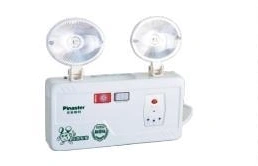
Twin-head emergency light
Cleanroom Lighting
Emergency Lighting and Exit Signs
| Specification | Twin-spot light | Exit sign |
|---|---|---|
| Brand | shengtongJH | |
| Configuration size, W × H × D (mm) | 300 × 287.5 × 68.5 | 380.5 × 175 × 76 |
| Light source | Adjustable LED heads | Illuminated sign face |
| Supply configuration | 230 V AC, 50/60 Hz | |
| Backup options | 90-minute or 3-hour battery configuration, selected for local requirements | |
| Mounting | Wall mounted | Wall or recessed mounting |
| Control / maintenance | Charge indication and test access | |
| Customization | Pictogram, direction, mounting and supply arrangement | |
Dimensions and configurations can be customized for your application.
Combine route illumination with clear exit identification, choosing each device for its separate role in the building's emergency-lighting design.
Illumination and direction are different tasks
An emergency light helps illuminate a route when the normal lighting supply fails. An exit sign identifies the route or exit. One does not automatically perform the other's job: a bright sign may not provide sufficient floor illumination, and a twin-spot light does not tell an unfamiliar person which direction to take.
Develop the layout around the actual escape route, doors, changes in level and obstructions. The sign direction and viewing position should remain understandable when normal lighting is unavailable.
Choose the operating arrangement
Maintained signs remain illuminated during normal operation, while other emergency devices operate when their normal supply fails. Battery-backed and central-supply systems have different wiring and maintenance requirements. Select the arrangement through the building's emergency-lighting design.
Keep the signs consistent
Use the pictograms, directions and language appropriate to the destination. Wall-mounted and recessed sign formats are available; the supplied face must match the final route plan. Do not rely on a sign's colour or wording alone to establish compliance.
Design for the tests that will keep it working
Provide access to indicators, test controls and batteries. A device mounted above inaccessible machinery may be difficult to inspect even when it looks tidy. Battery duration, illumination and sign visibility need to meet the requirements of the installed project and be verified accordingly.
Keep testing and replacement records, and investigate failed charging or reduced operating duration. Device format, mounting, directional face and backup arrangement can be customized for the route and its electrical design.