Cleanroom HVAC & Environmental Control
Stainless Steel Extraction Hood
| Specification | Configuration options |
|---|---|
| Brand | shengtongJH |
| Material | 304 stainless steel; material selection to suit emissions |
| Hood opening, W × D (mm) | 400 × 400 / 600 × 600 / 900 × 600 |
| Hood body height (mm) | 250 / 300 / 400; riser duct additional |
| Duct connection diameter (mm) | 150 / 200 / 250 configuration options |
| Mounting | Wall, equipment or independent support arrangement |
| Exhaust system | External ductwork and blower selected for process duty |
| Customization | Capture opening, neck, mounting and cleaning access |
Dimensions and configurations can be customized for your application.
Collect suitable process emissions near their source with a hood and exhaust connection sized as part of the complete ventilation system.
Bring the collection point close to the source
A stainless steel extraction hood provides a local opening through which suitable process air can enter an exhaust system. It can be arranged over or beside equipment that releases heat, steam or nonhazardous odors. Locating the hood close to the release point can reduce the volume of room air that must be moved to capture that emission.
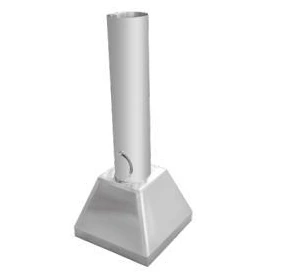
The illustrated hood includes a formed inlet and a vertical duct connection. Its shape does not determine a safe working duty on its own. The process, distance from the source, surrounding drafts, duct resistance and blower selection all affect whether emissions enter the hood.
Distinguish ventilation from containment
An open hood does not provide the physical barrier of an enclosed fume hood. Do not rely on a general capture canopy for toxic vapors, hazardous dusts, biological aerosols or flammable processes without a suitable engineered assessment and purpose-designed system. Material compatibility and discharge treatment also need to follow the actual substance.
Keep the operator out of the path between the source and the hood. A layout that pulls an emission past the breathing zone is unsuitable even if air visibly moves into the opening. Where practical, enclosure or a closer collection point may provide a better solution than increasing extract flow.
Connect it to a maintainable system
Coordinate the duct route, supports, service access and replacement air. For moisture-bearing exhaust, consider condensate collection and the effect of deposits inside the connection.
Verify capture in the installed operating condition and inspect the opening for buildup. Hood size, mounting and connection details can be customized for the process, with airflow and discharge requirements established for the complete exhaust system.