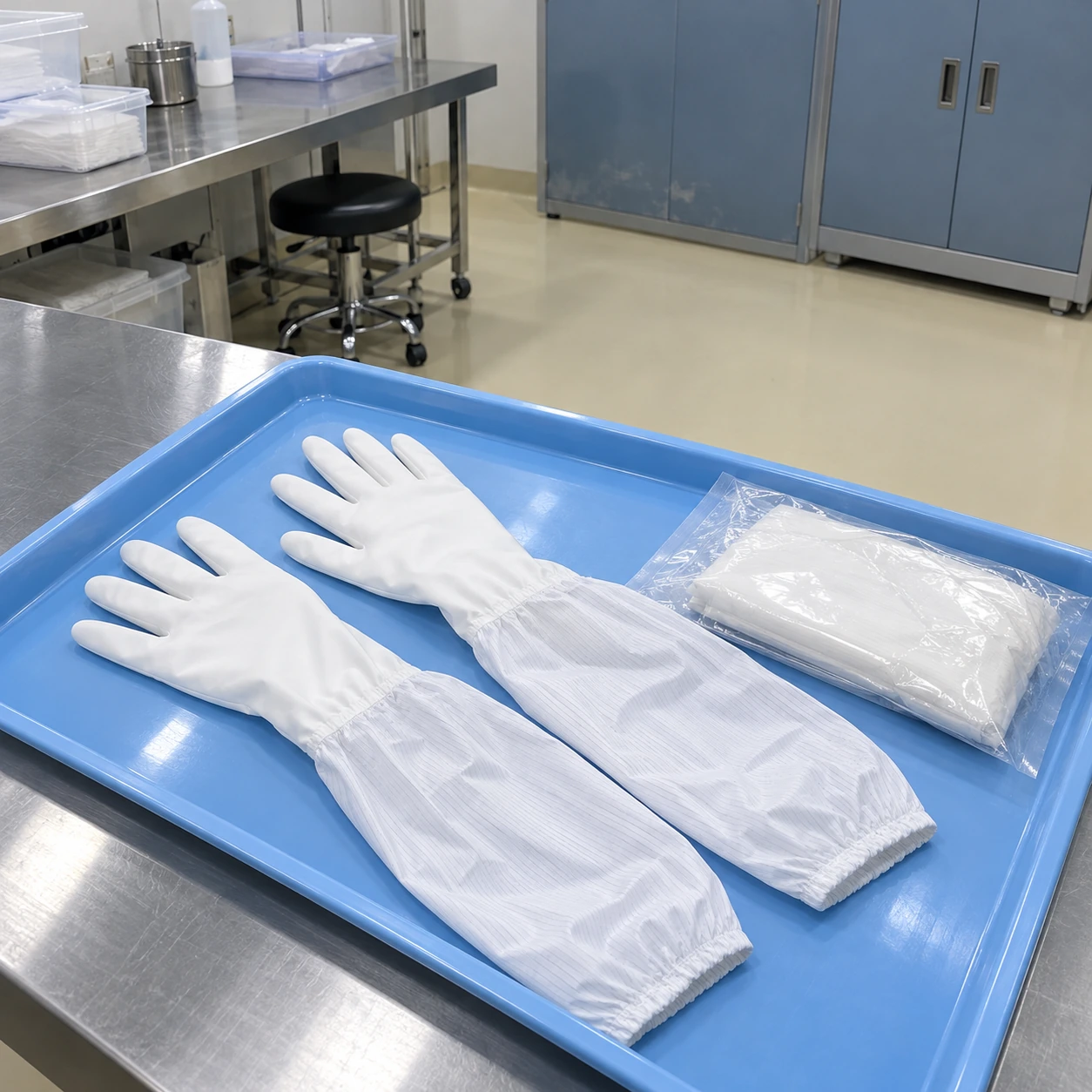
Cleanroom Gloves
cleanroom gloves class 100
| Cleanliness context | Class 100 / ISO 5, subject to product-specific glove evidence |
|---|---|
| Material choices | Nitrile, natural rubber latex or vinyl/PVC |
| Size ranges | XS–XXL in selected nitrile/latex families; S–XL vinyl options |
| Total length options (mm) | 300 or 305 according to material and glove family |
| Single-wall palm options (mm) | Nitrile 0.11 or 0.13; latex 0.18 or 0.20; vinyl 0.09 |
| Working surface | Smooth or textured, selected to suit the contact task |
| Sterility | Non-sterile and validated sterile supply treated separately |
| Packing | Nested PE bags or qualified pair wallets/pouches |
Thicknesses describe different material constructions and are not equivalent protection ratings. Cleanroom compatibility, chemical performance and sterile status require their own supporting information.
Material, size distribution and pack presentation can be customized around your Class 100 process and approved handling requirements.
A Class 100 glove requirement does not select the material for you. Nitrile, latex and selected vinyl constructions can serve different controlled-handling tasks when their documented performance matches the process.
Separate three decisions hidden in one description
Process cleanliness
What may the glove release or transfer to the product? Identify the relevant particles, residues or other contaminants and the evidence used to accept the glove.
Worker exposure
What will contact the hand during normal work or a foreseeable incident? A cleanroom compatibility statement does not replace chemical or mechanical protection evidence.
Operating technique
How will the operator don, grip, reach and replace the glove? Size, texture and packaging can affect whether the intended procedure is practical.
Choose the material after the task is clear
Nitrile offers a synthetic barrier option used in many controlled-handling processes. Latex provides an elastic natural-rubber construction where wearer sensitivity and site policy permit it. Vinyl provides a different, generally looser handling feel and must be assessed for the proposed light-duty task rather than substituted on price alone.
These are starting points for selection, not guarantees shared by every glove of that material. Compare the actual film, surface treatment, cleanliness data and approved exposure conditions. For a nitrile-only requirement, see nitrile cleanroom gloves class 100.
Define the accepted supply state
Class 100 is associated with the legacy air-cleanliness designation commonly mapped to ISO 5. It does not mean sterile. If the process is non-aseptic, a qualified non-sterile glove may meet the requirement. If sterile gloves are required, specify that separately with the validated pack and lot evidence.
Similarly, avoid applying one manufacturer's glove particle limit to all materials. The test method and reporting unit need to match before results can be compared.
Turn the decision into a repeatable order
Record material, shape, hand-size mix, packing and the evidence required with delivery. Include the current approved product when requesting a replacement so differences can be identified before issue to operators.
Keep different supply states easy to distinguish at the point of use. A suitable glove in the wrong cupboard or a similar-looking pack with a different requirement can still disrupt the procedure.
Material, size distribution and pack presentation can be customized around your Class 100 process and approved handling requirements.