Cleanroom Doors / Windows
Laser Safety Windows
| Plastic filter panel formats, W × H | 100 × 200, 210 × 297, 610 × 610 or 610 × 915 mm; availability depends on filter material |
|---|---|
| Filter material | Laser-filter polymer or mineral glass, selected for the exposure and required visibility |
| Protected wavelength | Exact operating wavelengths and any additional emissions identified before selection |
| Optical density | Required OD at each relevant wavelength, supported by the chosen filter's data |
| Exposure resistance | Verified against the applicable power density, pulse conditions and exposure duration |
| Visible transmission | Filter-specific VLT and colour; selected to support the observation task |
| Mounting | Continuous opaque retaining frame, controlled edge overlap and compatible seals |
Panel formats are overall filter W × H in millimetres, before allowance for frame overlap. Thickness, clear viewing area and protective ratings belong to the selected filter; colour or dimensions alone do not establish protection.
Window size and mounting details can be customized within the selected filter's documented limits, following the application's laser-safety assessment.
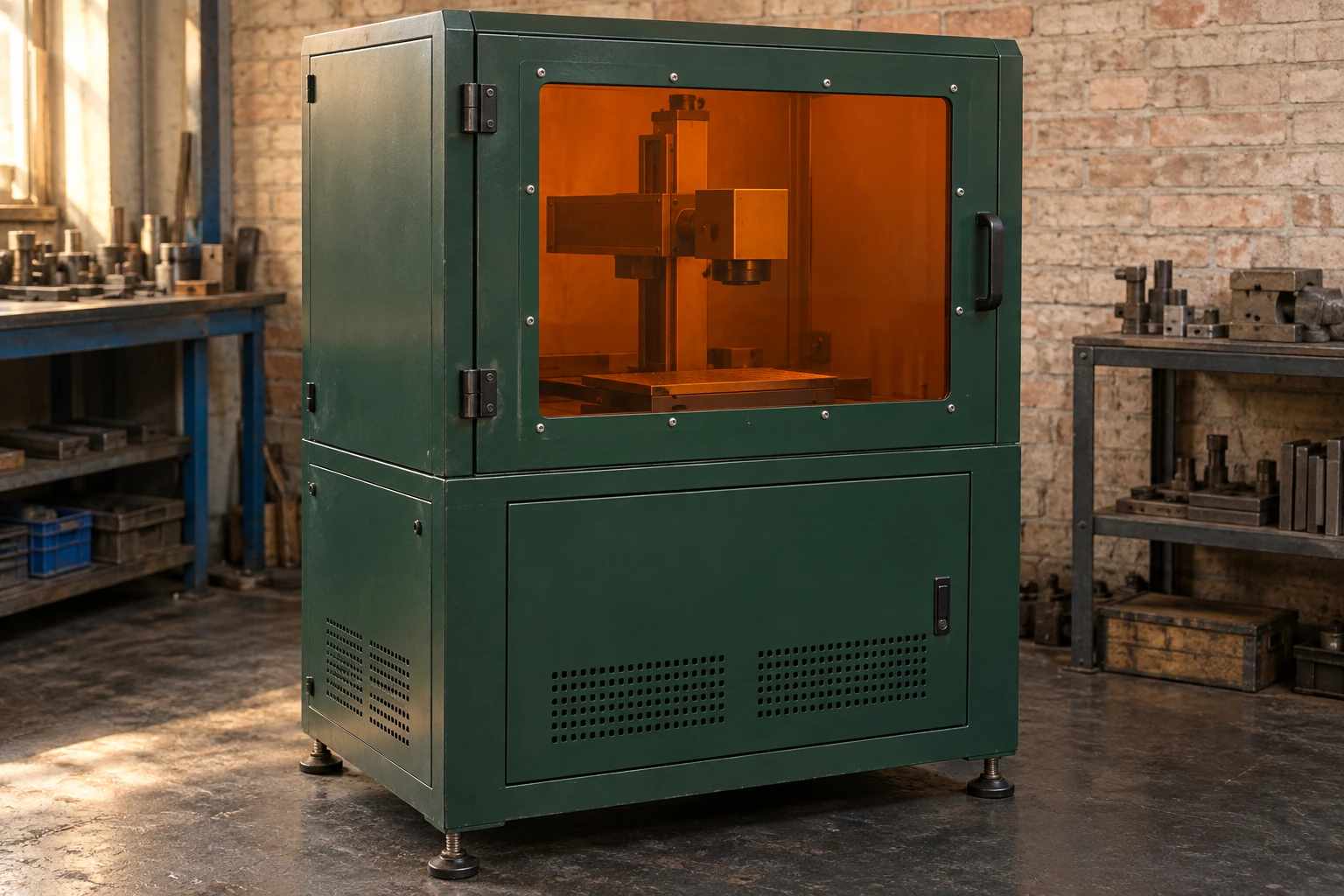
Laser Safety Windows allow observation through a laser enclosure using a filter selected for the radiation that can reach it. They are application-specific protective components. The laser wavelength, exposure conditions, filter documentation and installed frame must be considered together before a window is accepted for service.
Specify the radiation before choosing a colour
Start with every wavelength that could reach the window, including secondary outputs from the installed system. A filter suitable for one source may transmit a different wavelength. An orange, green or apparently clear pane cannot be identified reliably by appearance, and a colour match is not a valid replacement method.
Provide the continuous-wave power or pulse characteristics, beam size at the possible exposure point and the anticipated exposure duration. The responsible laser-safety specialist should establish the required protection from the actual enclosure geometry and operating modes.
Attenuation and survival are separate questions
Optical density describes attenuation at a stated wavelength. It does not, on its own, show how long the material withstands a concentrated beam. A panel selected for scattered radiation should not be assumed suitable for direct beam interception.
Keep the intended beam path directed toward a suitable beam stop, away from viewing areas. If a fault could expose the window, the assessment must include that condition and any protective shutdown arrangement. A viewing filter is one part of the enclosure, not a substitute for the rest of its guarding.
Maintain useful visibility
Visible transmission affects how clearly an operator can inspect the work. Excessively dark viewing conditions may encourage unsafe attempts to look around the barrier. Coordinate the filter choice with internal task lighting and, where appropriate, a camera view from outside the enclosure.
Choose the physical format after the protective material is identified. A larger available polymer sheet and a smaller glass filter may have very different protective and mechanical limits despite serving the same viewing purpose.
Protect the perimeter as well as the pane
A correctly selected filter cannot stop radiation that passes around its edge. Use an opaque surround with the specified retention and overlap, allowing for material expansion without opening a direct gap. Avoid unapproved holes, machining or adhesive changes that compromise the filter or its mounting.
The installed window should remain traceable to its filter identification and documentation. Door interlocks, access panels and surrounding enclosure joints require their own functional checks. Acceptance applies to the assembled system, not just a loose sheet supplied to the workshop.
Send the laser specification, window position, proposed opening and required protective documentation through the project enquiry. shengtongjh can coordinate the component specification and supply scope for review before ordering.
Window size and mounting details can be customized within the selected filter's documented limits, following the application's laser-safety assessment.