Cleanroom Doors / Windows
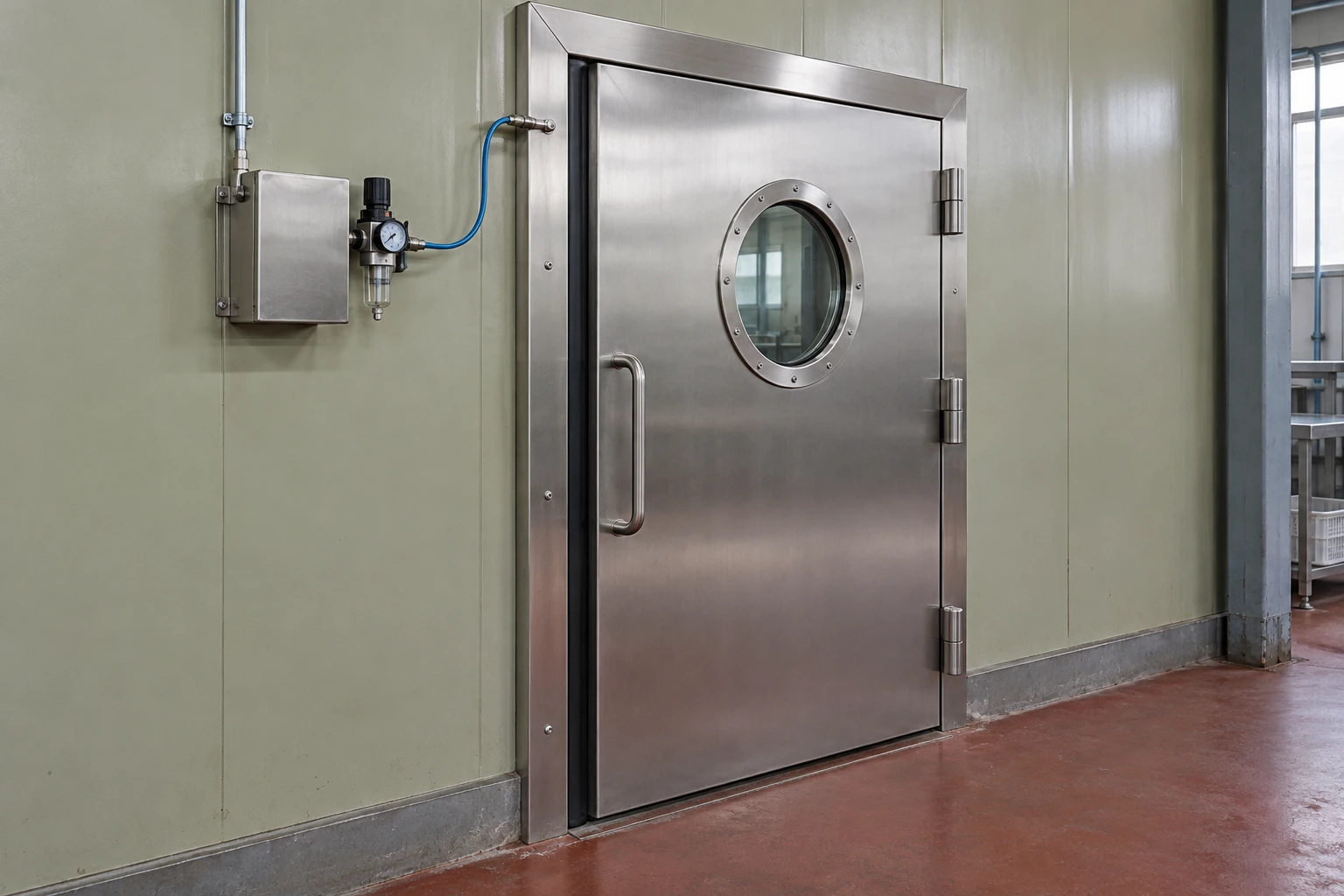
Inflatable Seal Doors
| Usable passage, W × H | 700 × 2100, 800 × 2100, 900 × 2100 or 1000 × 2100 mm |
|---|---|
| Leaf finish | Stainless steel or powder-coated galvanized steel |
| Frame | Rigid metal frame with a continuous gasket retention and mating detail |
| Sealing element | Inflatable silicone or application-selected elastomer; chemistry compatibility required |
| Pneumatic equipment | Regulated compressed-air supply, isolation, pressure indication and controlled venting |
| Control options | Closed-position detection, seal-pressure monitoring and process permissive interface |
| Viewing and release | Glazed observation port and accessible manual release arrangement where specified |
Passage sizes are clear W × H in millimetres. Frame envelope, wall opening, air quality, pressure settings and leakage acceptance are defined for the selected assembly; no universal pressure or leakage rating applies.
Door finish, passage size and control interfaces can be customized around the process, wall construction and required operating sequence.
Inflatable Seal Doors use a pneumatic gasket that expands against the mating surface after the leaf is closed. The seal retracts before opening, reducing the need to drag a heavily compressed gasket across the frame. They are useful where a controlled process boundary needs deliberate sealing and a defined release sequence.
A controlled sequence, not just a tighter gasket
- Close and locate the leaf. The door must reach its correct seated position before inflation. A position switch can report closure, but it does not by itself prove a sealed boundary.
- Inflate and establish the permissive. Regulated air expands the gasket. Where the process depends on the seal, the control design should distinguish a command to inflate from confirmation that the required condition has been reached.
- End the process and release. Vent or retract the seal before the door moves. Opening against an inflated gasket can damage the sealing surface and make subsequent closure unreliable.
Keep pneumatic pressure separate from room pressure
The air inside the gasket makes it expand. The pressure difference between two rooms or across a process enclosure is a different duty. Increasing inflation pressure does not automatically increase the door's allowable differential pressure. Leaf stiffness, frame fixing, gasket geometry and its supported sealing gap all contribute.
The air connection needs the specified cleanliness, dryness and regulation. An accessible isolation point and a replaceable supply line simplify service. Position components so a technician can reach them without removing the installed frame.
Choose the seal for the actual exposure
Temperature, cleaning agents and process chemicals can affect an elastomer differently from the metal skin. Select the seal material using the intended chemicals and their concentrations rather than a general claim that a door is stainless steel. Rounded seal corners and consistent retention help avoid local stretches and trapped debris.
Keep the contact surface free of scratches, deposits and misaligned fittings. A damaged mating edge may leak even with a new gasket fitted.
Make acceptance measurable
Specify the test medium, differential pressure, stabilization time and allowable leakage for the installed boundary. Test scope should include the frame-to-wall joint as well as the leaf seal. A pressure indicator on the air line cannot substitute for that leakage test.
For procurement, send the process duty, wall detail, cleaning schedule and required control signals through the enquiry form. These identify the seal, services and interface package without assuming a standard door is suitable for every containment application.
Door finish, passage size and control interfaces can be customized around the process, wall construction and required operating sequence.