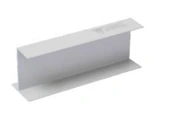
Conventional window frame
Cleanroom Aluminium Profiles
Cleanroom Window Frame Profiles
| Specification | Configuration options |
|---|---|
| Brand | shengtongJH |
| Section options | Conventional frame; single-glazing fixing section; window mullion |
| Wall thickness options (mm) | 50 / 75 / 100 |
| Glass thickness options (mm) | 5 / 6 / 8; section matched to glazing |
| Glazing arrangement | Single or coordinated double-glazed assembly |
| Cut lengths (mm) | 1000 / 1500 / 3000; cut to window schedule |
| Material options | 6063 aluminium; matching polymer connectors where required |
| Surface finish | Anodized or powder coated |
| Customization | Section, finish, cut length and connections to suit the installation |
Dimensions and configurations can be customized for your application.
Coordinate glazing, mullions and panel edges to create a stable observation window with a maintainable perimeter seal.
Choose the frame around the glazing arrangement
A conventional frame closes the observation opening, a single-glazing fixing section retains one pane, and a mullion separates adjoining glazed areas. Each profile has a different engagement depth and sealing function. Combine them as a matched window system instead of assembling unrelated sections around the glass.
Single and double glazing require different edge details. A pane that fits the opening still needs proper edge support, allowance for movement and a compatible retaining arrangement. For large windows, consider the glass weight and impact requirements as well as the desired sightline.
Make observation useful
Locate the window so staff can see the relevant process without entering the room. Equipment, storage and the position of a mullion can block the view even when the opening is generous. Consider standing and seated viewpoints before dividing the glazing.
Where windows continue across several panels, align the supports with the wall construction. Do not leave a long window dependent on a narrow unsupported strip of panel. A clear load path helps keep the perimeter seal from moving during routine building use.
Keep the surfaces and edges maintainable
A flush or near-flush arrangement reduces ledges on the room side. Select the seal and retaining method so the glass can be replaced without destroying the surrounding wall. Keep screw heads and recesses out of the main cleaning surface wherever the assembly allows.
In a double-glazed unit, the sealed cavity requires its own moisture-control detail. Applying surface sealant around a conventional frame is not equivalent to making an insulated sealed glazing unit. Coordinate the unit construction with the temperature difference across the partition.
Frame sections, mullion positions, glass interfaces and finishes can be customized for the observation opening and wall system.