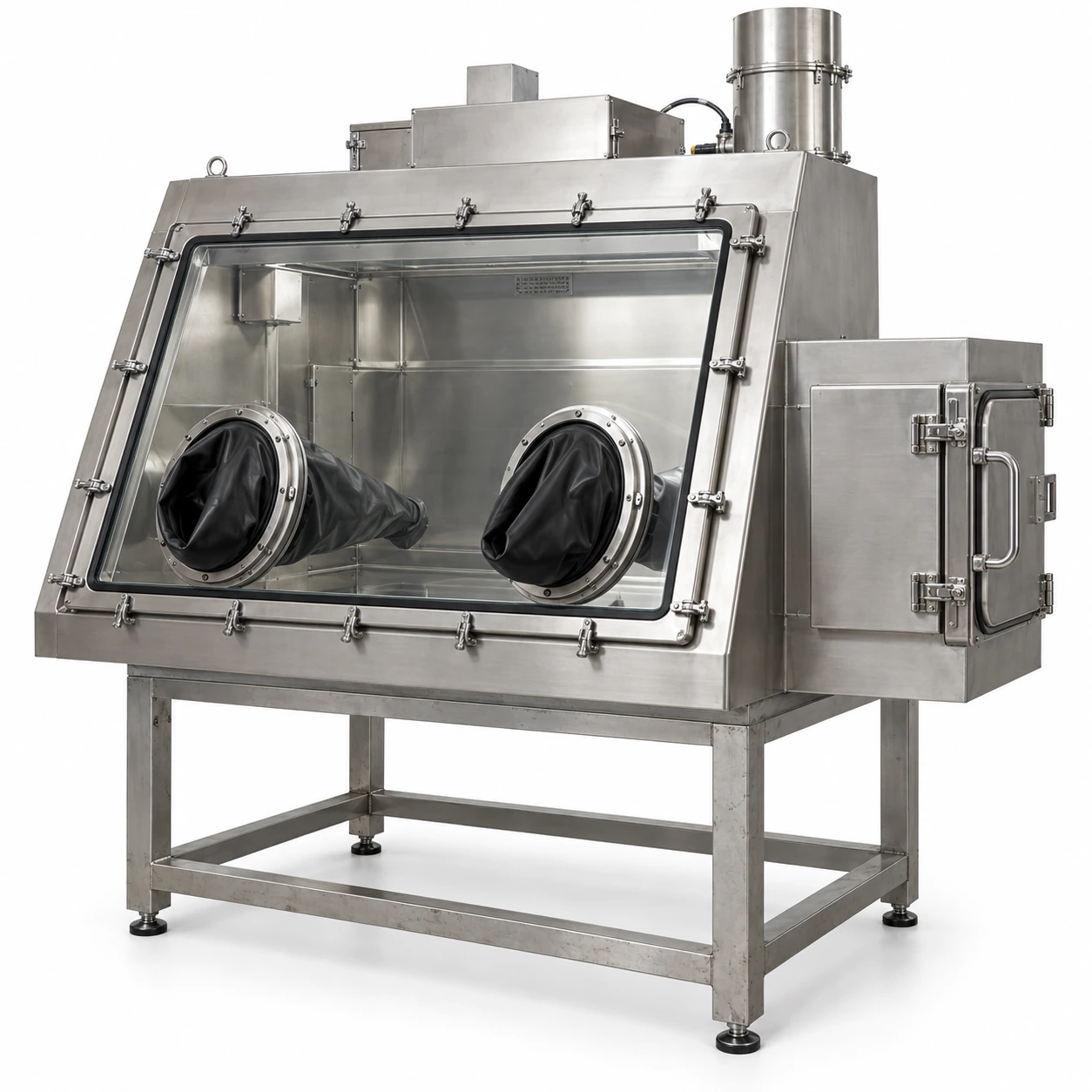
Biological Safety Cabinets
class iii biological safety cabinet
| Brand | shengtongJH |
|---|---|
| Cabinet construction | Enclosed negative-pressure chamber; fixed viewing window and sealed glove ports |
| External W × D × H (mm) | 1540 × 880 × 2000 or 1790 × 880 × 2080 cabinet configurations |
| Corresponding work zone W × D × H (mm) | 910 × 650 × 660 or 1165 × 650 × 660 |
| Work chamber / gloves | 304 stainless steel chamber; glove material and reach selected for the process and cleaning agents |
| Air treatment | HEPA-filtered inlet; two HEPA exhaust filters in series, selected as a complete containment arrangement |
| Transfer interface | Interlocked double-door chamber; other validated transfer interfaces require project-specific engineering |
| Monitoring / utilities | Chamber pressure indication, audible and visible alarms; 220–230 V, 50/60 Hz or matched project supply |
| Installation | Dedicated outdoor exhaust arrangement; support, service access and connection layout selected with the facility |
Dimensions describe cabinet and work-zone configurations; transfer-door movement, external exhaust equipment and maintenance clearances must also be allowed for. Filtration, pressure limits and acceptance tests are agreed for the selected complete system.
Cabinet size, glove arrangement, transfer interfaces and utility connections can be customized for the intended use and installation conditions.
A Class III biological safety cabinet separates the operator from the work chamber through a sealed physical barrier. Fixed viewing glass, attached gloves, filtered air and a controlled transfer route work together; the cabinet must be selected with the laboratory containment system.
A sealed working boundary
The important difference from an open-front cabinet is physical separation. The operator reaches the enclosed workspace through sealed gloves rather than an open sash. Air treatment and negative pressure support this barrier, while the viewing window remains closed during use. A cabinet with glove holes alone does not establish Class III containment: window seals, penetrations, transfer doors, filtration and exhaust control all contribute to the complete assembly.
This type is considered when the facility risk assessment requires an enclosed primary barrier. Buying it does not give the surrounding room a biosafety level. Building systems, access arrangements, staff procedures and commissioning remain part of the laboratory design.
Plan what crosses the enclosure
Materials and equipment
The transfer opening can limit useful capacity before the chamber itself becomes full. A device may fit inside yet be impossible to bring through the transfer chamber, turn into position or remove for repair. Compare the largest equipment envelope with the complete transfer route, including handles, cables and removable parts. A side transfer chamber also needs space for its outside door and the person loading it.
Utilities and waste
Services should enter through designed, sealed connections. Adding a cable hole or a new pipe after installation can compromise the enclosure. The approved layout should cover required power, instrument connections and the intended waste-removal interface. A pass-through chamber provides a transfer boundary; it does not by itself establish that an item has been decontaminated.
Glove reach determines usable space
Gross chamber width is a poor measure of operator access. Gloves restrict reach and dexterity, and a deep instrument can leave controls or connections beyond a comfortable working position. Arrange the equipment footprint around the glove ports, then consider how consumables, detachable components and cleaning access fit around it. Smooth interior finishes and protected edges help avoid glove damage.
Glove material is a compatibility choice. The materials handled and the cleaning chemistry can affect resistance, flexibility and service life. Replacement gloves must match the port and attachment system, so the agreed supply should identify the correct replacement parts rather than treating gloves as a universal accessory.
Exhaust is part of the installation
A Class III system needs a dedicated, engineered exhaust arrangement that maintains the required pressure relationship. It is not a room-recirculating appliance. CDC and NIH guidance describes outdoor discharge after two HEPA filters in series, or after a HEPA filter followed by an air incinerator. The latter is a separate engineered treatment arrangement, not a standard accessory implied by this listing.
Filter grade alone cannot establish enclosure performance. Filter seals, housing access, duct connections, monitoring and the response to loss of exhaust must be considered together. The exact filter specification and performance evidence belong to the supplied cabinet and installation.
Define the supply boundary before ordering
A useful quotation distinguishes the cabinet from the external fan, ductwork, support, transfer equipment, installation and on-site acceptance work. This prevents an apparently complete purchase arriving without essential building connections. As an equipment sourcing and integration supplier, shengtongJH can coordinate the cabinet requirements with the selected supplier; specialist containment design and approval require the facility's qualified team.
The handover scope should identify the relevant construction documents, operating information, replacement-part references and agreed verification results. A generic certificate, a filter-efficiency statement or a product photograph cannot replace evidence for the exact supplied system.
Cabinet size, glove arrangement, transfer interfaces and utility connections can be customized for the intended use and installation conditions.