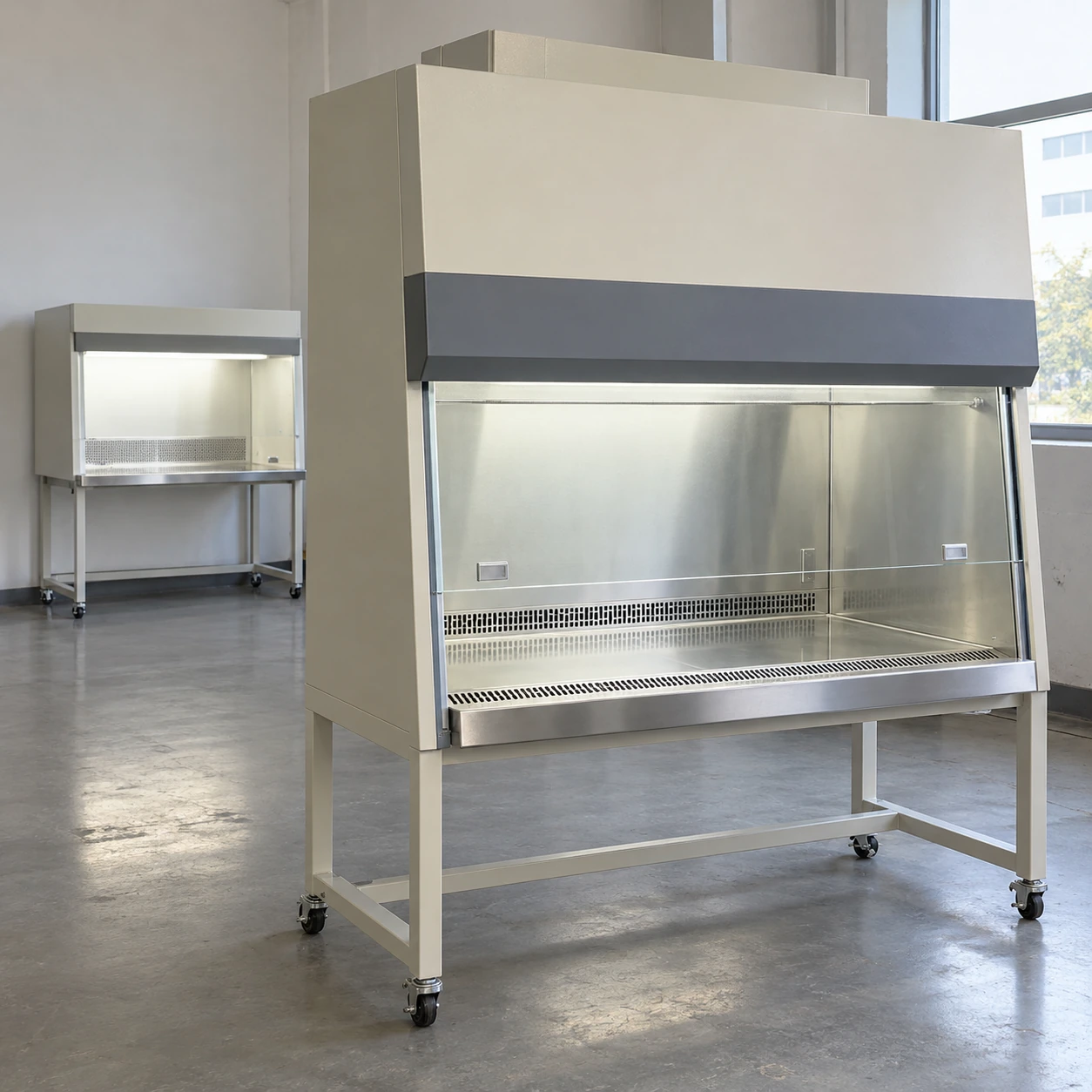
Biological Safety Cabinets
biological safety cabinet vs laminar flow hood
| Brand | shengtongJH |
|---|---|
| Equipment selection | Class II biological safety cabinet; containment type selected from the laboratory risk assessment |
| Work zone W × D × H | 1000 × 520 × 640 / 1300 × 520 × 640 mm |
| Overall dimensions | Set by cabinet type, stand and exhaust arrangement; working dimensions are not the delivery envelope |
| Air system | HEPA-filtered downflow and exhaust with inward airflow at the front opening |
| A2 option | Partial air recirculation; exhaust connection follows the selected cabinet design |
| B2 option | Total exhaust with dedicated compatible building extraction |
| Surfaces | Coated steel cabinet and stainless steel work area |
| Power supply | 220 V, 50 Hz; destination-specific selection |
| Controls | Sash position indication, airflow monitoring and applicable alarms |
| Installation acceptance | Field verification of airflow, filter integrity, alarms and exhaust interfaces |
The listed configurations are biological safety cabinet options. Final type and exhaust requirements follow the assessed procedure and supplied cabinet design.
Working area, service fittings and room interfaces can be configured to the approved laboratory requirement.
A biological safety cabinet should be selected from the required containment function. A laminar flow clean bench is a product-protection workstation and is not an equivalent lower-cost replacement for that function.
Begin with the route an aerosol could take
At an open-front workstation, personnel protection depends on how air moves at the opening and where contaminated air can go. A clean bench sends filtered supply air over the work but does not provide the same inward containment barrier as a biological safety cabinet.
This distinction matters when a purchasing team is comparing similar-looking glass-fronted enclosures. “Laminar” describes an air pattern; it does not identify the protection provided to people outside the work zone.
Cabinet type changes the building requirements
A Class II A2 cabinet recirculates part of its filtered air. Its exhaust arrangement must follow the selected equipment design, including any permitted canopy connection. A B2 arrangement depends on dedicated external extraction and appropriate replacement air.
These are installation dependencies, not simply menu options. The laboratory must assess chemical use, room air balance, exhaust operation and the response to a failure. HEPA filtration is for particles and does not make a recirculating cabinet suitable for unrestricted vapour-producing work.
Before purchase
Identify the procedure, risk assessment, largest instruments and available services. Choose the protection function and cabinet type before selecting width.
At installation
Position the cabinet away from disruptive traffic and supply jets. Verify the installed airflows, filter integrity, alarms and any building exhaust interface.
During operation
Use the specified sash position and keep air grilles clear. Maintain a service programme appropriate to the cabinet, its use and local requirements.
Where a clean bench remains useful
A separate clean bench can serve dust-sensitive, nonhazardous assembly or preparation that does not require biological containment. Keeping that equipment's role explicit avoids staff assuming that all filtered workstations offer the same protection.
Relocating a cabinet or changing a large instrument inside it can alter the operating conditions. Evaluate the affected installation before resuming work. Service involving contaminated internal components may need specialist decontamination and trained personnel.
shengtongJH can coordinate the selected equipment and interface information with the laboratory's requirements. Include the expected installation and field-verification responsibilities in the supply enquiry.
Working area, service fittings and room interfaces can be configured to the approved laboratory requirement.