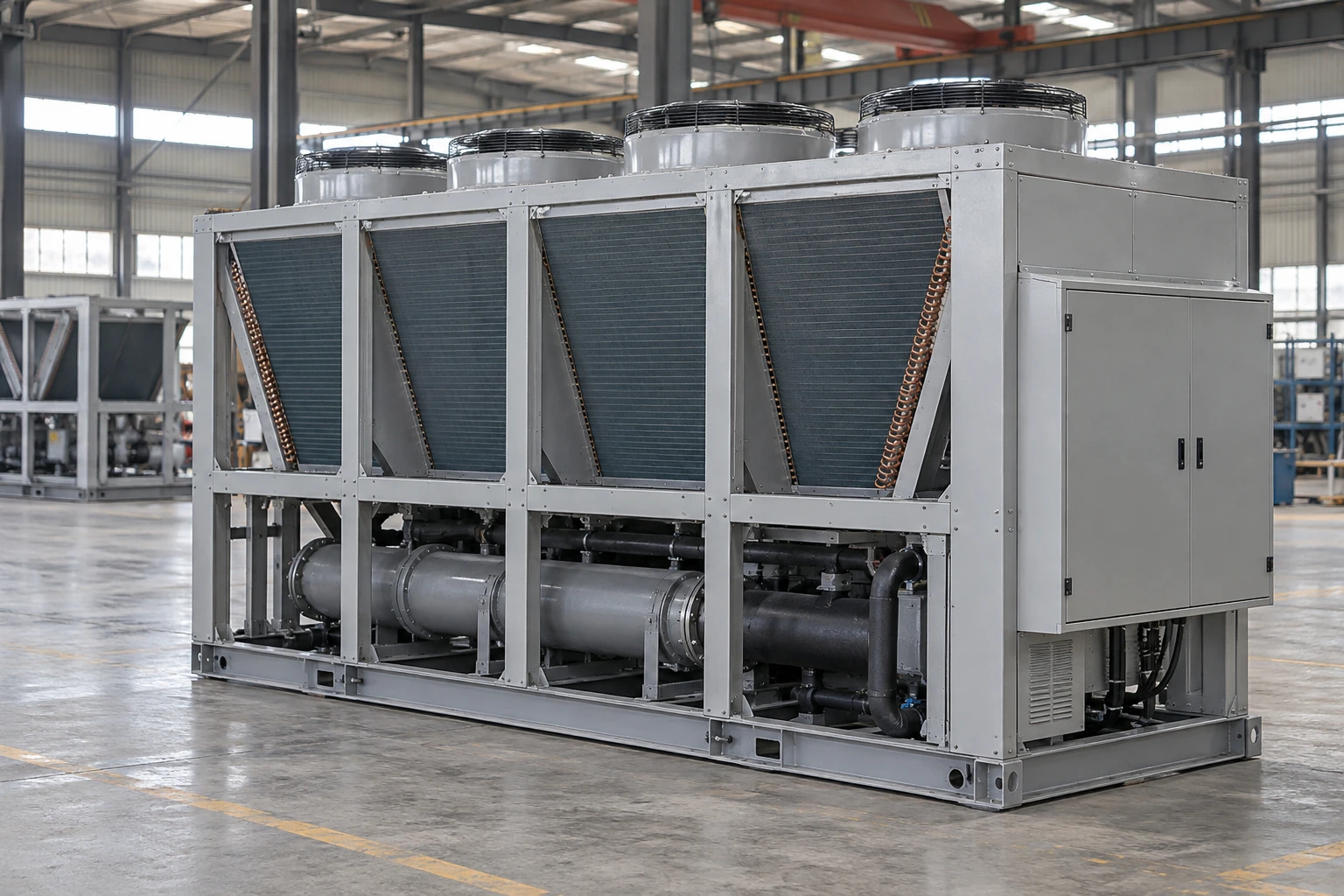
Air-to-Water Heat Pumps
air to water heat pump manufacturers
| Supply brand | shengtongJH |
|---|---|
| Product scope | Industrial and commercial hydronic heat pumps; packaged or modular equipment |
| Capacity enquiries | 30–110 kW module classes and larger coordinated plants |
| Heating data required | Capacity and input at the specified outdoor condition and entering/leaving water temperatures |
| Cooling data required | Separate cooling capacity and input; commonly compared at air 35°C and water 12/7°C |
| Electrical schedule | Voltage, frequency, maximum current, starting characteristics and auxiliary loads |
| Size information | Final W × D × H in mm, service clearances, shipping sections and operating mass |
| Configuration comparison | Compressor control, outdoor coil, water heat exchanger, pump and material compatibility |
| Operational evidence | Defrost sequence, minimum flow/volume, cold-weather selection and agreed test data |
| Documents | Equipment identity, arrangement drawing, wiring, controls and operating instructions |
Certification and performance evidence must correspond to the proposed equipment and agreed conditions. Final specifications are attached to the selected supply configuration.
The equipment specification, inspection scope and supporting plant can be tailored to your industrial project and procurement requirements.
Comparing air to water heat pump manufacturers requires more than nominal capacity and a catalogue COP. shengtongJH coordinates equipment sourcing and purchase specifications so proposed units can be compared against the same industrial operating requirements.
Put competing ratings on the same basis
A heating COP at mild outdoor temperature and low water temperature is not comparable with one at colder air and hotter water. Request the same operating points from each proposed source, including the conditions that matter most to the project.
Check what is included in the electrical input and whether heating performance accounts for defrost under the stated test method. Keep seasonal efficiency metrics separate from a single operating-point COP. Neither should be used as a guaranteed annual energy bill.
Compare the complete package
A quoted unit may include a pump and controls, while another requires them separately. Review the available pump duty, fluid limits, buffer requirements and external control interfaces. Familiar component names alone do not show that the assembled machine matches the application.
Ask for evidence at the difficult conditions
Cold, humid weather can expose defrost and drainage issues that a mild-day demonstration cannot show. High heating-water temperatures can change output and electrical demand. Cooling performance needs its own summer selection. Specify the evidence required rather than relying on a broad ambient operating range.
A minimum operating temperature means the unit can operate within defined limits; it does not necessarily mean it retains nominal capacity there. Confirm the available duty and any supplementary heat needed at the design condition.
Construction
Review coil protection, water-side materials, panel access and component removal routes for the intended environment.
Compliance
Match documents to the exact equipment and destination requirements. A component certificate or general company approval is not automatically certification of the complete unit.
Service information
Confirm usable wiring, alarm descriptions, component identification and support responsibilities before the purchase is finalised.
Convert the comparison into an agreed order
Record accepted duty points, components, interfaces and documentation. Require review of proposed substitutions that affect performance or installation. The supply scope should then identify transport, installation and commissioning responsibilities, so technical agreement survives the purchasing process.
The equipment specification, inspection scope and supporting plant can be tailored to your industrial project and procurement requirements.