Air Filters
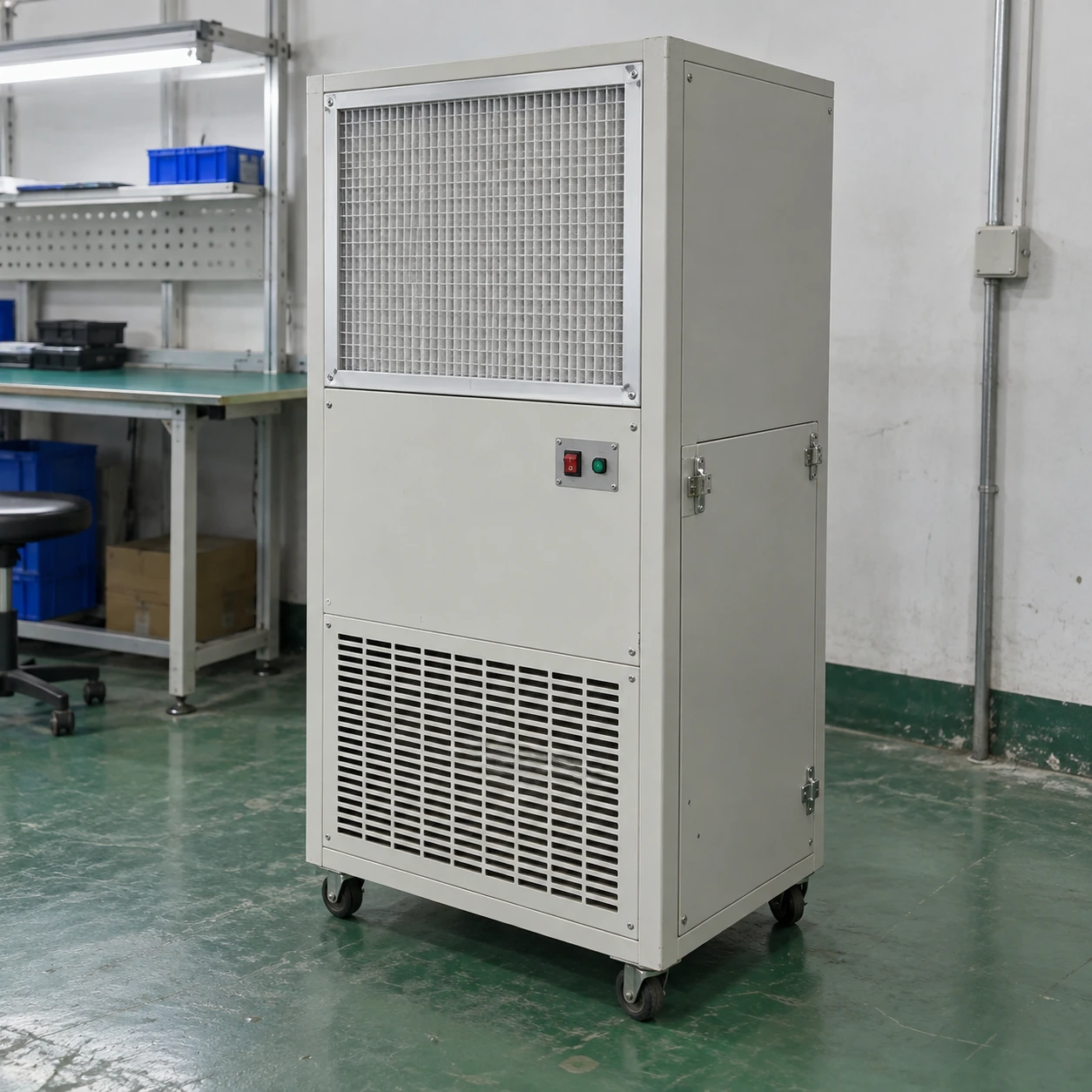
ulpa filter air purifier
| Brand | shengtongJH |
|---|---|
| Equipment format | Floor-standing industrial recirculating cabinet; castors or fixed feet |
| Filtration stages | Serviceable prefilter followed by a selected U15 final filter |
| Final-filter options W × H × D | 305 × 610 × 66 / 610 × 610 × 90 mm |
| Cabinet size options W × D × H | 550 × 450 × 1100 / 700 × 550 × 1450 mm, subject to matched layout |
| Airflow selection range | Approximately 250–600 m³/h duty options; fan and filter selected together |
| Cabinet material | Powder-coated steel; stainless steel option |
| Fan arrangement | Speed-controlled centrifugal or EC fan with pressure allowance |
| Electrical supply | 220–240 V single phase, 50 or 60 Hz to suit selected components |
| Monitoring | Filter differential-pressure indication; airflow monitoring option |
| Service access | Separate prefilter access and secured final-filter compartment |
| Discharge arrangement | Grille direction selected to reduce intake/discharge short-circuiting |
Cabinet dimensions and airflow are configurable selection envelopes, not tested model ratings. Electrical input, noise and delivered airflow are specified for the matched fan/filter assembly; the ULPA panel grade alone does not rate the whole machine.
Cabinet size, filter arrangement, air discharge, controls and mobility can be customized to the industrial workspace and operating conditions.
An industrial ULPA filter air purifier combines a fan, prefiltration and a sealed final-filter section in a recirculating cabinet. It is intended for particle-control support in production and technical work areas, rather than domestic room-air purification.
Clean-air delivery depends on the complete cabinet
A very efficient filter is useful only if sufficient air passes through it and unfiltered air cannot bypass its seal. The cabinet, fan and filter therefore need to be selected as one assembly. A machine using an ULPA element should not advertise the element's percentage as a measured whole-unit removal result without appropriate evidence.
Compare delivered airflow at the operating setting, not just the fan's free-air maximum. The prefilter, final filter and internal route all add resistance. As the filters load, a suitable fan and control arrangement must maintain the intended duty or provide a clear indication that servicing is needed.
Place it where circulation is useful
Keep the intake clear of stored materials and direct the outlet into the area that needs treatment. Air returning immediately from outlet to inlet leaves other parts of the space poorly served. Machinery, partitions and heat sources influence the circulation path.
Protect the final stage
An accessible prefilter takes the initial dust load and can reduce unnecessary handling of the more delicate final panel. Set a service routine based on condition and resistance. A clogged prefilter should not be removed permanently to recover airflow.
Make maintenance visible
A pressure indication is useful when its normal operating baseline is recorded. It does not by itself prove filter integrity. Keep the final-filter door secure and provide enough space to withdraw the filter without touching or scraping its face.
Know which problem recirculation cannot solve
This equipment returns treated air to the same space. It does not provide outdoor ventilation or automatically capture contamination at a process source. Solvent vapour, oil mist, combustible dust and hazardous emissions need an application-specific control system; a general ULPA cabinet is not a substitute for suitable extraction or containment.
For sensitive production, assess the work area after installation under representative operating conditions. The machine alone cannot guarantee a room classification. Give shengtongJH the room layout, particle source and required operating schedule so the cabinet can be sourced against a meaningful duty, including replacement-filter availability and maintenance access.
Cabinet size, filter arrangement, air discharge, controls and mobility can be customized to the industrial workspace and operating conditions.