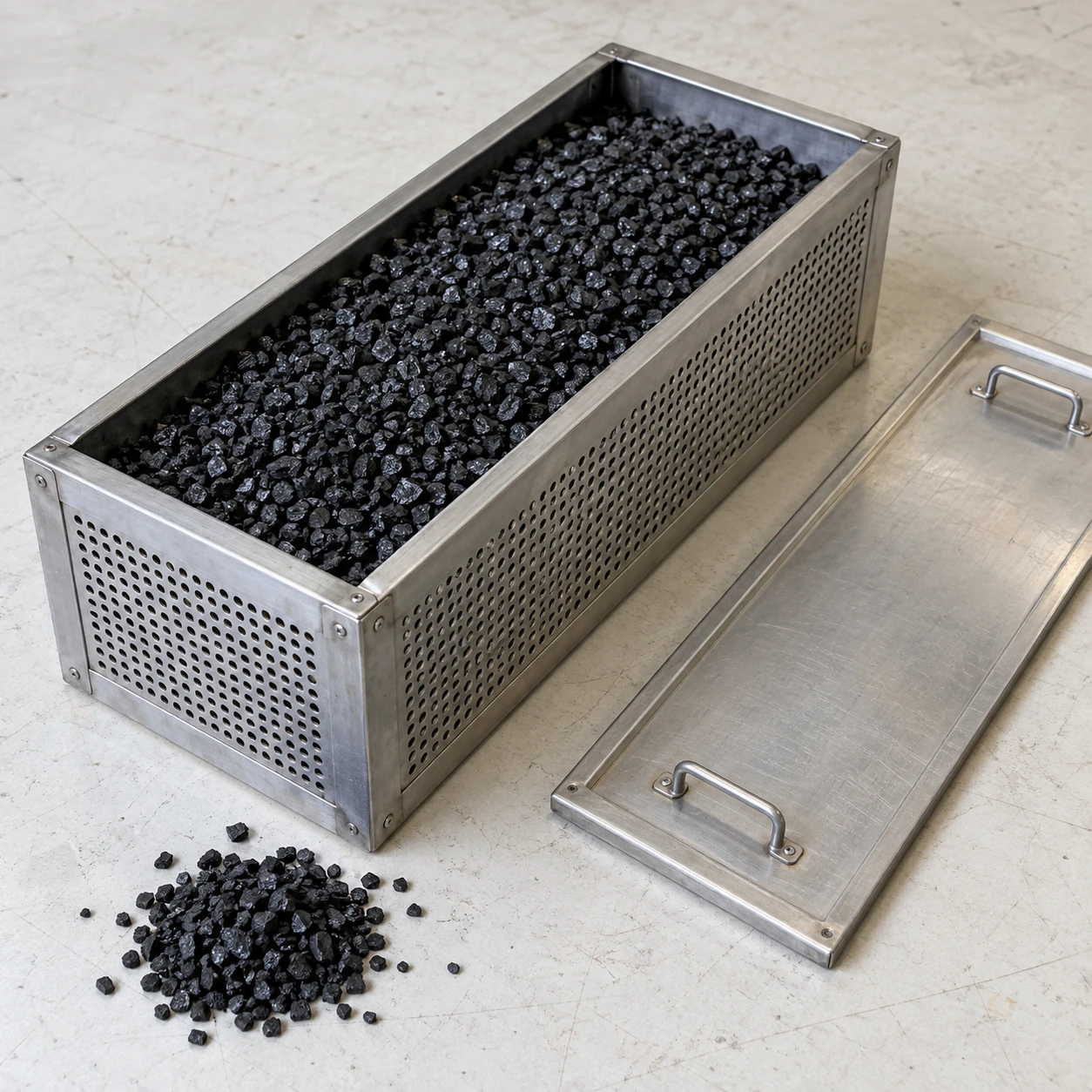
Air Filters
refillable activated carbon air filter
| Brand | shengtongJH |
|---|---|
| Construction | Reusable loose-fill tray or cassette with secured filling opening |
| Tray W × H options | 300 × 600 / 500 × 500 / 600 × 600 mm |
| Bed depth options | 25 / 50 mm; selected for the treatment duty |
| Frame options | Galvanized or stainless steel |
| Media retention | Mesh and internal retaining layer matched to particle size |
| Refill material | Specified granular or pelletized adsorbent; no unapproved substitution |
| Fill arrangement | Specified media quantity and filling method for the selected cassette |
| Gasket provision | Replaceable compatible perimeter seal |
| Service method | Module removal to a suitable controlled work area |
| Inspection items | Frame condition, screen integrity, closure and seal contact |
Reusable refers to the cassette when its condition remains acceptable. Spent media is replaced or handled by an appropriate specialist; normal cleaning does not restore adsorption capacity.
Tray dimensions, filling access, material retention and gasket details can be customized to the housing and site changeout procedure.
A refillable activated carbon air filter allows the spent adsorbent to be replaced while retaining a serviceable cassette or tray. It suits sites with a controlled media-change procedure and sufficient access; it is not the same as washing and reusing exhausted carbon.
Decide whether refilling suits the maintenance team
Keeping the housing can reduce replacement hardware, but refilling introduces handling work. The site needs an appropriate work area, suitable storage for fresh media and a route for removing spent material. Where these arrangements are impractical, a sealed replacement cassette may be easier to manage.
Compare the whole changeout task rather than only the price of loose carbon. Include access time, inspection, labour, replacement seals and the handling requirements associated with the contaminants captured during service.
Restore a consistent bed
Use the specified adsorbent and the filling procedure for that tray. An uneven fill or settled gap can create an easier air path through part of the cassette. Simply topping up the visible surface without checking the rest of the bed can leave the original performance problem unresolved.
Check retention mesh and internal layers before closing the filling cover. A change in particle size may allow material to escape or alter resistance, even when the new carbon appears similar.
Keep fresh and spent material separate
Identify containers clearly and keep unused adsorbent protected from ambient contamination. Spent carbon must be managed according to what it has collected and the applicable site procedures. Do not treat it as ordinary harmless packing material solely because it looks dry.
Isolate the affected air system before removal and use the handling precautions appropriate to the media and captured contaminants. A removable tray is an access feature; it does not by itself provide a contained changeout system.
Inspect the cassette before putting it back
Look for distortion, corrosion, damaged closures and deteriorated gaskets. Reusing a damaged frame can create bypass regardless of the quality of the fresh carbon. Confirm the completed fill and secure installation, then record the media identity and change date for the next service cycle.
For sourcing through shengtongJH, provide the existing tray drawing, target adsorbent and access constraints. Agree the replacement-media specification with the tray configuration so future replenishment does not become a sequence of unrelated substitutions.
Tray dimensions, filling access, material retention and gasket details can be customized to the housing and site changeout procedure.