Air Filters
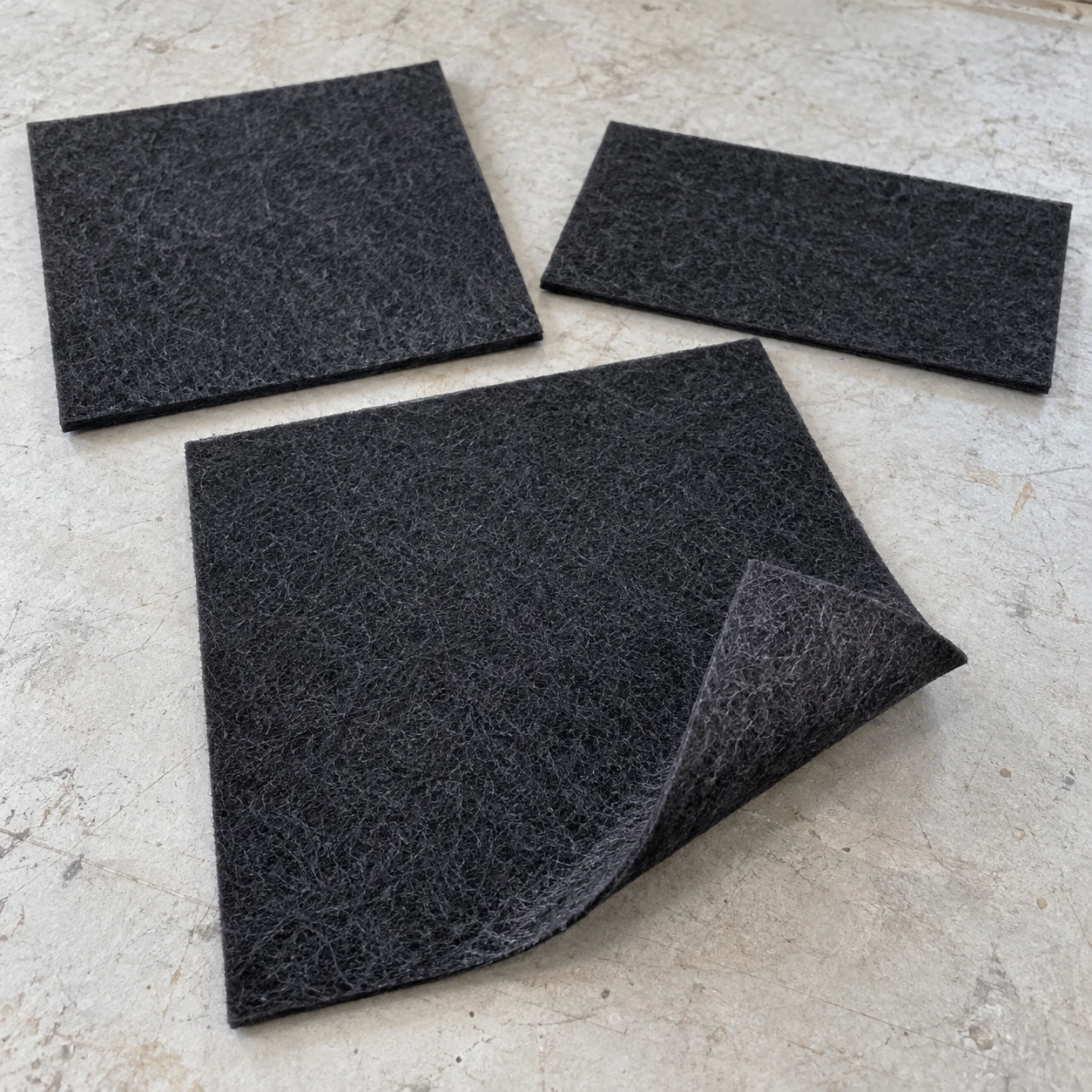
activated carbon air filter sheet
| Brand | shengtongJH |
|---|---|
| Media form | Carbon-loaded nonwoven sheet |
| Cut-size options W × H | 300 × 300 / 500 × 500 / 600 × 600 / 1000 × 1000 mm |
| Loft selection | Nominal 5 / 10 / 12 mm constructions, subject to chosen medium |
| Carrier | Nonwoven synthetic-fibre backing |
| Carbon attachment | Bonded loading appropriate to the selected sheet construction |
| Mounting | Supported flat insert with secure edges |
| Edge treatment | Cut-to-size or framed assembly |
| Airflow direction | According to selected medium and support arrangement |
| Upstream protection | Separate particulate filtration where required |
| Maintenance | Replace spent sheet; do not assume it is washable |
Cut sizes and lofts are selectable media configurations. Carbon loading, gas capacity and resistance must be specified for the chosen construction; sheet thickness alone is not a performance rating.
Sheet dimensions, loft, backing and edge or frame arrangement can be customized to the industrial equipment insert.
An activated carbon air filter sheet is a flexible carbon-loaded medium cut to fit a suitable support frame or equipment insert. It provides a compact molecular-filtration layer where space is limited, but its small media inventory must be considered against the gas load.
Use a sheet where a thin layer is appropriate
Carbon-loaded nonwoven media can fit shallow equipment spaces and can be cut to an existing insert shape. This makes it useful for selected low-load odour-polishing duties. It should not be treated as equivalent to a deeper filled bed merely because both products contain activated carbon.
The amount of adsorbent available and the air contact conditions limit what a thin layer can do. For a demanding continuous gas load, compare a filled cassette or other suitable treatment format before choosing a sheet for convenience.
Specify more than black colour
Two sheets can have similar appearance but different carriers, carbon loading and resistance. State the target contaminant and the operating airflow when requesting material. If a particular media construction has been qualified for the equipment, retain its identity rather than accepting any black replacement pad.
Keep the sheet supported
A flexible insert can bow, wrinkle or pull away from its edges when poorly retained. Provide a suitable backing or frame and ensure the installed sheet covers the intended opening. Packing extra layers into a shallow holder can change resistance and make reliable edge seating harder.
Cut and store it without losing the useful material
Plan the cutting layout around the required finished dimensions. Keep the material clean and avoid stretching it to cover an undersized cut. Where trimming leaves loose material, follow the selected medium's handling and finishing guidance before fitting it into the air stream.
Store unused sheets in closed protective packaging away from process fumes and moisture. Material exposed beside an odour source before installation may start loading before it enters service. Maintain the material identification so replacement stock remains consistent.
Set realistic service expectations
A sheet that appears clean may still be spent. Do not expect washing or vacuuming to restore adsorption capacity; follow the approved replacement method for the selected medium. For repeated cutting of the same shape, roll material may suit the workshop workflow, while finished sheets can simplify fitting and stock control.
Sheet dimensions, loft, backing and edge or frame arrangement can be customized to the industrial equipment insert.