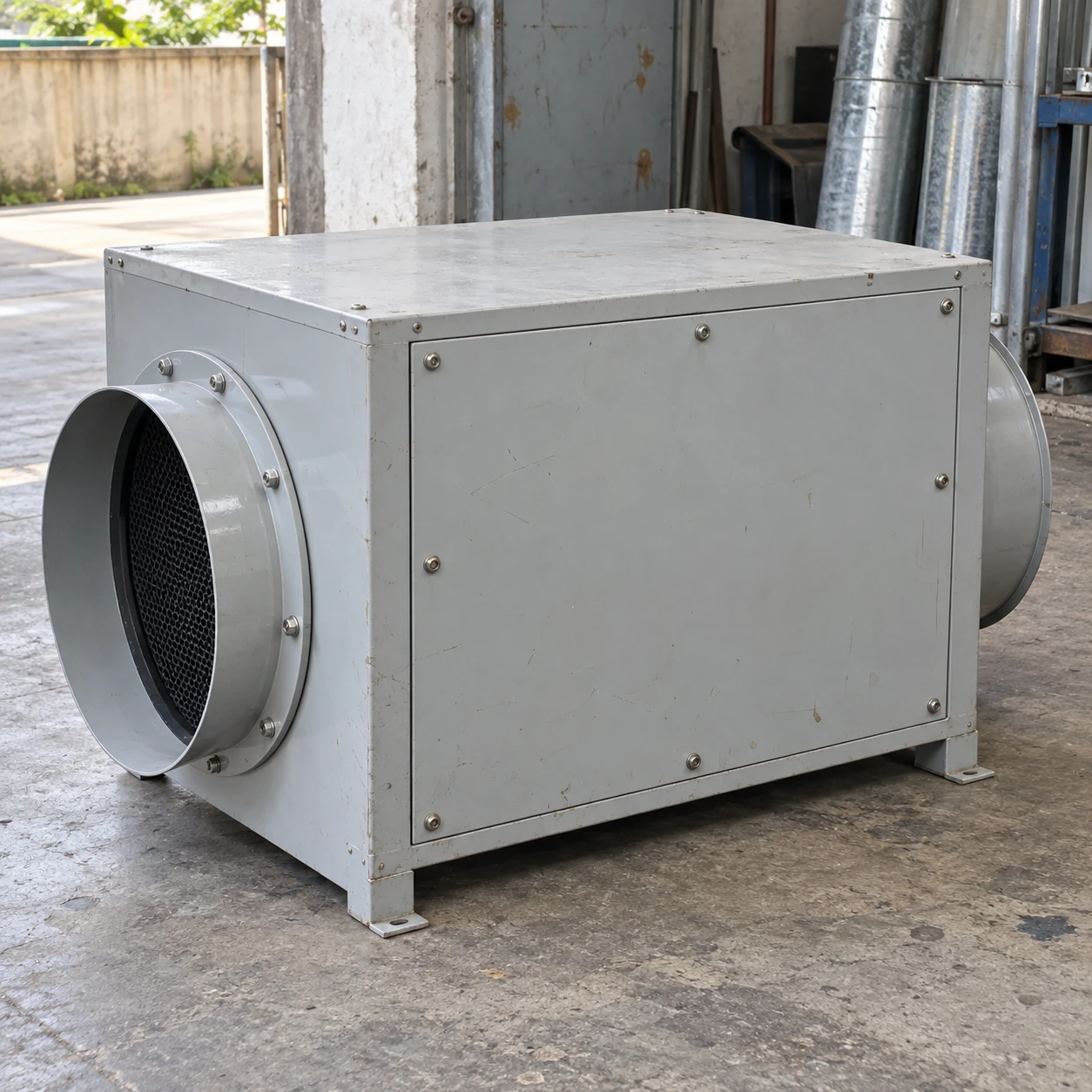
Air Filters
activated carbon air filter industrial
| Brand | shengtongJH |
|---|---|
| Retrofit format | Replacement cassette bank or matched duct housing |
| Panel interfaces W × H | 300 × 300 / 300 × 600 / 600 × 600 mm options |
| Depth selection | 25 / 50 mm panel options, subject to existing clearance |
| Connection checks | Existing flange opening, seal face and withdrawal path |
| Housing material | Compatible galvanized or stainless steel construction |
| Carbon selection | Matched to current compounds and operating conditions |
| Existing operating data | Airflow, temperature, humidity and process schedule |
| Inspection access | Service door or removable module section |
| Pressure monitoring | Used for airflow restriction assessment, not as a carbon-capacity indicator |
| Replacement scope | Media, cassettes, seals or housing as condition requires |
Replacement dimensions must be checked against the installed interfaces. A deeper or different-media filter is a new selection, not an automatic like-for-like upgrade.
Replacement modules, housing interfaces, seal details and access arrangements can be customized to the existing industrial installation.
For an existing industrial installation, an activated carbon air filter should be replaced or upgraded around the cause of the performance loss. The useful question is not just whether the carbon is old, but whether the air still passes through the intended media under the original duty.
When odour returns, investigate more than age
Exhausted carbon is one possible cause, but air bypass, changed process chemistry and higher airflow can produce similar complaints. Note when the problem occurs and compare it with production conditions. A problem appearing only during one operation may indicate a different challenge from a steady background odour.
Inspect seals and seating before ordering a larger charge. If air is avoiding the bed, more carbon in the same leaking arrangement will not solve the route problem. Likewise, a visibly clean cassette may have little useful capacity left for the target compound.
Read resistance correctly
A rising pressure difference can point to particulate fouling, blocked upstream filters or another restriction. A normal pressure difference does not demonstrate that adsorption capacity remains. Use appropriate contaminant monitoring, media assessment or an established service history for the gas-control question.
Compare readings at equivalent airflow. A lower pressure difference after a fan-speed change is not evidence that the filter has recovered or that it is delivering the intended treatment.
Check changes outside the box
New extraction branches, altered dampers and production expansion can all change the duty. A filter selected for the previous airflow or contaminant mixture may no longer fit. Record these changes before choosing between a like-for-like replacement and a redesigned treatment arrangement.
Make the retrofit practical to install and service
Measure the existing connection planes and the space available for removal. A replacement housing can fit the duct opening yet block a platform or require an impossible cassette withdrawal. Include flange depth, support positions and any surrounding insulation in the survey.
shengtongJH can source modules and interface components against this defined scope. Where the review identifies a hazardous process or a changed contaminant profile, obtain the appropriate system assessment before substituting general ventilation equipment. Following installation, compare treatment performance under representative production conditions and retain the revised media specification for subsequent purchases.
Replacement modules, housing interfaces, seal details and access arrangements can be customized to the existing industrial installation.