Cleanroom HVAC & Environmental Control
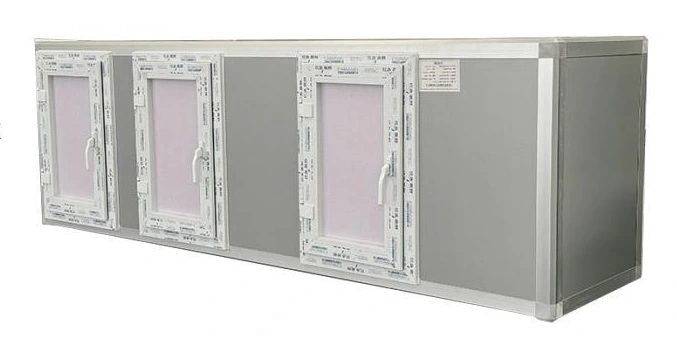
Supply Air Fan Box
| Specification | Supply configuration |
|---|---|
| Duty | Supply-air movement |
| Construction | Enclosed fan assembly with service panels |
| Casing material options | Galvanized steel / stainless steel |
| Filter configuration | Pre-filter and secondary filtration; final stage selected to the application |
| Fan control | Speed-control arrangement selected to the duty |
| Dimensions | Configured around fan, filtration and service space |
Dimensions and configurations can be customized for your application.
A supply air fan box combines an enclosed fan section with a coordinated intake and delivery path. Filtration stages and access arrangements can be selected around the air source, room requirement and installation space.
Deliver air through the complete system
The useful duty of a supply fan box is the air that reaches the connected spaces after passing through filters, ducts and terminals. Select the fan at that operating resistance rather than from a free-air volume figure. This prevents a unit that looks large enough on paper from falling short once connected.
Consider the filter condition over time. Resistance normally changes as particulate filters load, and the control system needs an appropriate response. A fan chosen only for clean-filter operation may leave insufficient capacity later in the service cycle.
Put the treatment stages in the right order
The incoming air source determines the first filtration requirement. Coarse dust should be intercepted before it unnecessarily loads a more demanding downstream stage. The final selection depends on whether the fan box serves general ventilation, a controlled room or a separate terminal-filter system.
Filters need seals and retention that keep air in the intended treatment path. They also need a practical removal route. Allow room for the full element to leave the casing, and position service doors where the maintenance team can use them after installation.
Coordinate three installation interfaces
Air connections
Keep intake and discharge transitions orderly. A severely restricted inlet or an abrupt discharge bend can change the installed fan performance and increase noise.
Support
Provide a suitable base or suspension arrangement and coordinate vibration treatment with the duct connections. The casing should not be distorted by supporting adjacent ductwork.
Controls
Define start/stop, speed demand and any interlocks with connected equipment. Make the local electrical and service access reachable without removing unrelated systems.
Air movement is one part of room control
A supply fan box moves air and can carry selected filtration stages. Temperature and humidity control require the corresponding conditioning equipment and control sequence. The enclosure should not be assumed to provide cooling, heating or dehumidification simply because it resembles a larger air-handling unit.
Coordinate supply with return or extract flow so the room receives the intended air balance. Changing fan speed to solve one room's problem can affect every connected branch.
Plan for routine service
Keep filter checks, fan inspection and cleaning access straightforward. Record the selected duty and filter configuration so replacements preserve the operating arrangement. Casing dimensions, filtration and control options can be customized to the application. Discuss the required supply-air duty.