Cleanroom HVAC & Environmental Control
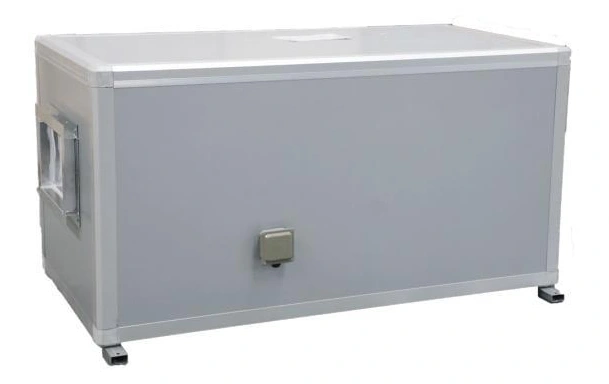
Exhaust Fan Box
| Specification | Exhaust configuration |
|---|---|
| Duty | Extract-air movement |
| Construction | Enclosed fan assembly with service access |
| Casing material options | Galvanized steel / stainless steel |
| Air treatment | Selected to the exhaust contaminant and process |
| Fan control | Selected to the extraction sequence |
| Dimensions | Configured around fan duty and installation space |
Dimensions and configurations can be customized for your application.
An exhaust fan box draws air from connected spaces or extraction points and moves it towards the discharge route. Its fan, casing and any treatment stages must suit the air being removed and the resistance of the complete system.
Start with what the exhaust contains
General room extract and process exhaust can place very different demands on a fan. Identify dust, moisture, vapours, temperature and any corrosive substances before choosing the casing and internal components. A clean-air ventilation unit should not automatically be used for an aggressive or hazardous air stream.
The extraction point also matters. A fan can move a large total volume while failing to capture a contaminant at its source if the hood or pickup is poorly arranged. Coordinate the fan box with the collection method rather than using increased fan speed as the only response to weak capture.
Include treatment and discharge resistance
The fan must overcome the connected pickup, ductwork, treatment stages and discharge fittings at the required duty. Account for the operating condition of filters or other treatment equipment. If resistance changes during use, the control strategy should preserve the required extraction performance within the system's selected range.
Particle filters and gas treatment perform different tasks. A particulate element does not remove every vapour or odour. Select treatment around the actual contaminant, and locate it so inspection and changeout remain practical.
Prevent the exhaust returning
Coordinate the discharge location with nearby air intakes, openings and occupied areas. The fan box is only one part of that route. An otherwise adequate unit cannot correct a discharge layout that allows extracted air to re-enter the building.
Keep make-up air in the picture
Extracted air needs a replacement path. Without a coordinated supply or transfer arrangement, extraction can create unwanted pressure differences, difficult door operation or unpredictable flow through other openings. Review the air balance when adding an exhaust unit to an existing facility.
For controlled rooms, the supply and exhaust sequence should preserve the intended pressure relationship during normal operation and changes in operating mode. Define what happens when either fan is stopped, rather than leaving the two systems to operate independently.
Service the parts that see the air stream
Access
Leave a clear route to panels and components that require inspection. Consider how deposits or used filters will be handled during maintenance.
Materials
Match exposed components to the process and cleaning method. The visible outer casing is not the only surface requiring compatibility.
Operating checks
Track the relevant airflow or pressure condition so a gradual loss of extraction can be addressed before it affects the process.
Dimensions, materials and control arrangements can be customized to the extraction duty. Discuss the exhaust air stream and route.