Cleanroom Doors & Windows
Cleanroom Window
| Specification | JN-DLFATW |
|---|---|
| Opening size | Custom-sized to the viewing requirement and wall system |
| Frame options | Aluminium alloy / 304 stainless steel |
| Frame depth | 50 mm |
| Wall interface | Machine-made or handmade wall panels |
| Glazing | Double glazing; 5 mm toughened panes |
| Glass spacing | 40 mm |
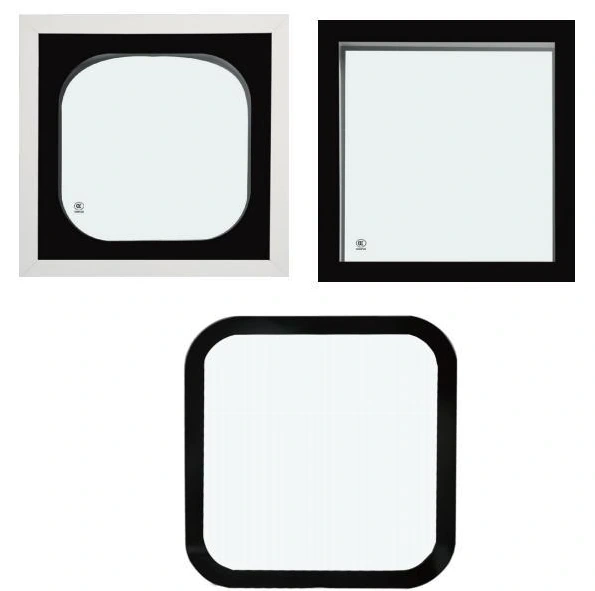
| Style options | Square outer / rounded inner; black square edge; black rounded edge |
| Sealing | Sealant-filled perimeter |
| Moisture control | Desiccant granules within the glazing assembly |
Dimensions and configurations can be customized for your application.
A cleanroom window lets staff observe work or equipment without opening the room boundary. The frame, glazing and wall joint should provide a smooth, cleanable finish while preserving a useful line of sight.
Make observation part of the room layout
Opening a door to check equipment interrupts the boundary and introduces traffic. A viewing window can provide the required sightline from an adjacent corridor or control area. Its value comes from seeing the relevant work position, indicator or movement clearly, not simply adding the largest glazed area available.
Consider the height of the observer, the position of equipment and anything that may later block the view. A tall cabinet, a parked trolley or reflections from a bright corridor can reduce the usefulness of an otherwise well-made window.
Match the window to the complete wall build-up
A flush installation reduces exposed ledges around the viewing area and makes wiping easier. The frame depth and edge detail need to correspond to the actual panel construction and finished surfaces. Confirm how the window is supported and how the opening is prepared before panels are installed.
The joint between frame and wall is part of the cleanroom boundary. An attractive glass panel cannot compensate for an unfinished perimeter gap or a poorly supported cutout. Coordinate the sealing detail with the wall system and the cleaning process used in that area.
Choose the edge style deliberately
Rounded and square viewing shapes create different visual edges, but the practical choice also includes wipe access and the relationship to adjacent doors. Keep the opening large enough for its purpose while leaving adequate surrounding wall structure and room for associated services.
Distinguish surface condensation from moisture inside
Double glazing separates the two panes, and desiccant helps control moisture within the sealed assembly. That does not eliminate condensation under every room condition. Moisture on an accessible surface can be related to the surrounding air and glass temperature; persistent fogging inside the cavity suggests a different issue with the glazing assembly.
Locate the window with awareness of cold surfaces, supply-air discharge and nearby process heat. If visibility is critical, review the temperature and humidity on both sides as part of the selection rather than treating an anti-fog description as an unconditional guarantee.
Protect the glass and joints during use
Use cleaning methods compatible with the glazing, edge finish and sealant. Avoid scraping the perimeter with sharp tools or using the frame as a support for equipment. Inspect damage after nearby carts or maintenance activities strike the opening.
Where fire, radiation, impact or containment performance is required, select an assembly supported for that duty; ordinary cleanroom glazing does not establish those properties. Provide the wall thickness, desired sightline, environmental conditions and cleaning chemicals. Window size, frame finish and viewing arrangement can be customized for the application. Plan the viewing opening.